
Checkerboard Cichlid: Chessboard Lattice & Filagree Lyretail
1. Natural Biotope, Evolutionary History & Taxonomic Rank
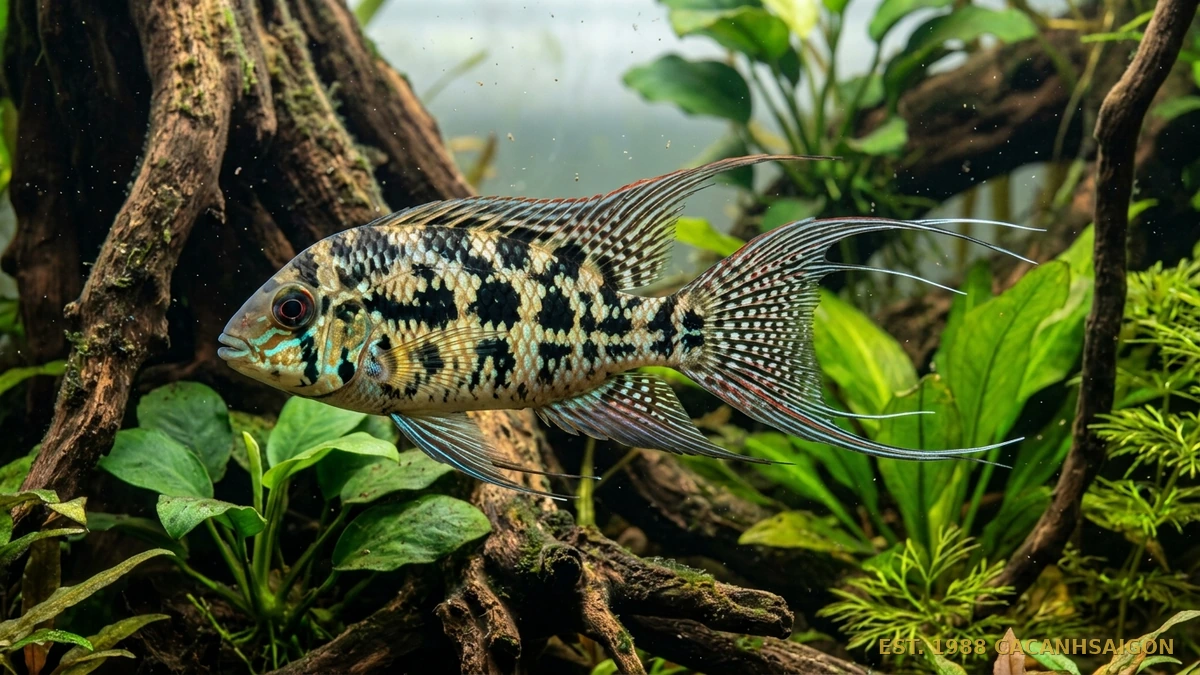
Originating from the pristine fluvial ecosystems of Rio Negro & Orinoco, Checkerboard Cichlid (Dicrossus filamentosus): Chessboard Lattice & Filagree Lyretail inhabits slow-moving forest tributaries, shaded clearwater streams, or acidic blackwater igarapés enriched with natural humic substances. Assigned to the family Cichlidae, this species has evolved behavioral and morphological adaptations that excel within dense macrophyte foliage where diffuse light and microscopic fauna abound.
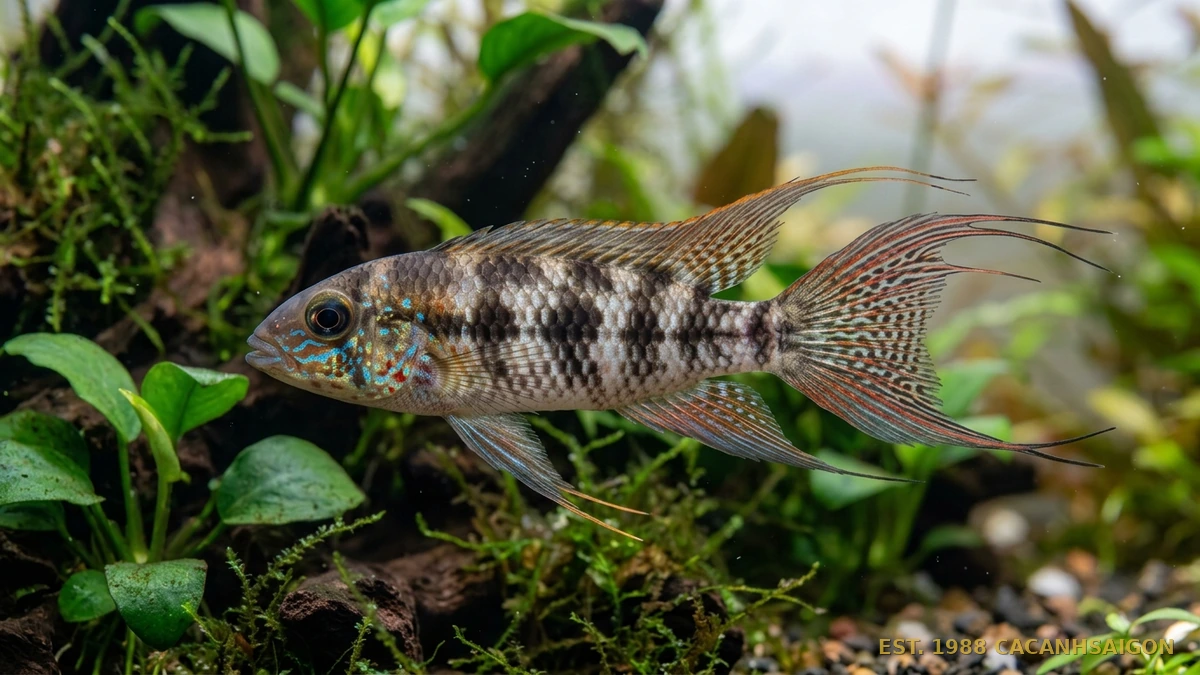
Anatomically, adult specimens reach an average length of 7.0 – 8.5 (trống), 4.5 (mái) cm. Their lateral dermal scales contain layered guanine crystals (iridophores) that refract incident light into vivid iridescent blue, green, or crimson hues under balanced WRGB LED lighting. Their terminal oral structure is optimized for skimming surface biofilms, planktonic micro-crustaceans, and drifting organic particles.
2. Planted Biotope Parameters & Laboratory-Grade Water Chemistry
Through dedicated aquatic husbandry at Saigon Aquarium, long-term physiological vitality and full chromacity expression require rigorous maintenance of the following hydrochemical baselines:
– pH Buffering & General Hardness (pH 4.5 – 6.0 | GH 1 – 3 dGH): Active plant aquasoils buffer carbonate hardness while providing slight acidity that protects delicate epidermal and branchial membranes from osmotic stress.
– Thermal Equilibrium (25 – 29 °C): Daily temperature swings should not exceed 1.5°C. Steady ambient warmth sustains baseline enzymatic metabolism and immune response.
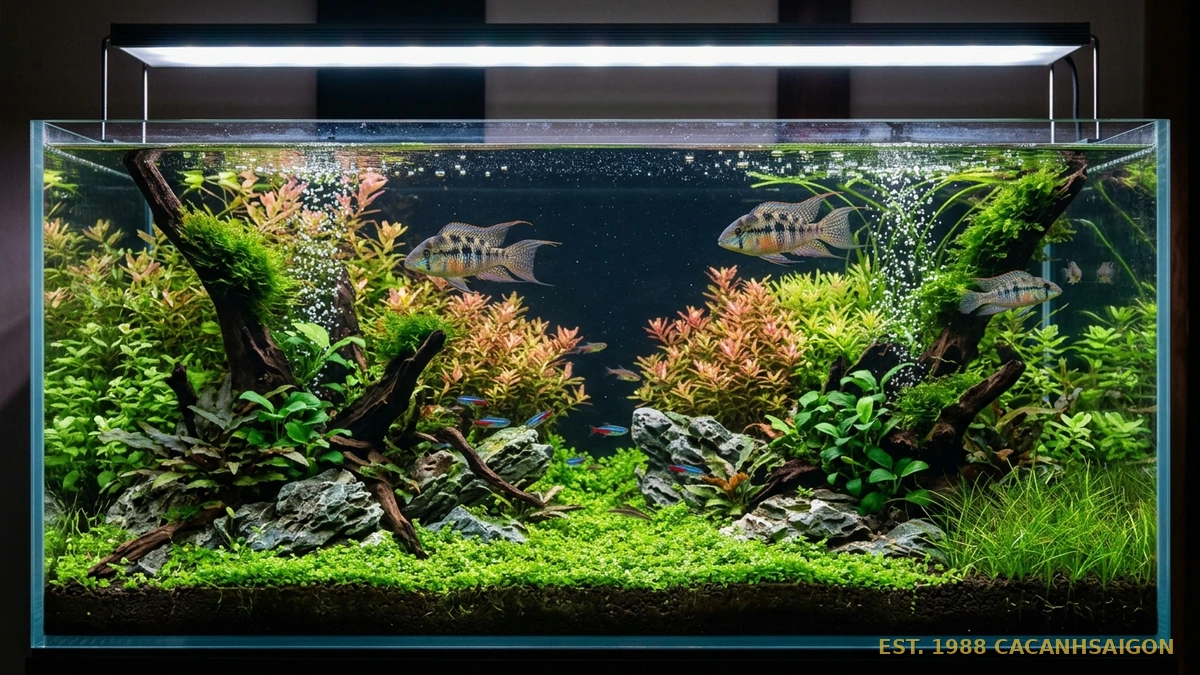
– Hydrodynamic Flow & Carbon Dioxide: Gentle, laminar outflow generated by glass Lily Pipes ensures homogenous dissolved oxygen distribution while holding injected CO2 within 20-30 ppm without inducing respiratory distress.
3. Schooling Dynamics, Invertebrate Safety & Nutritional Regimen
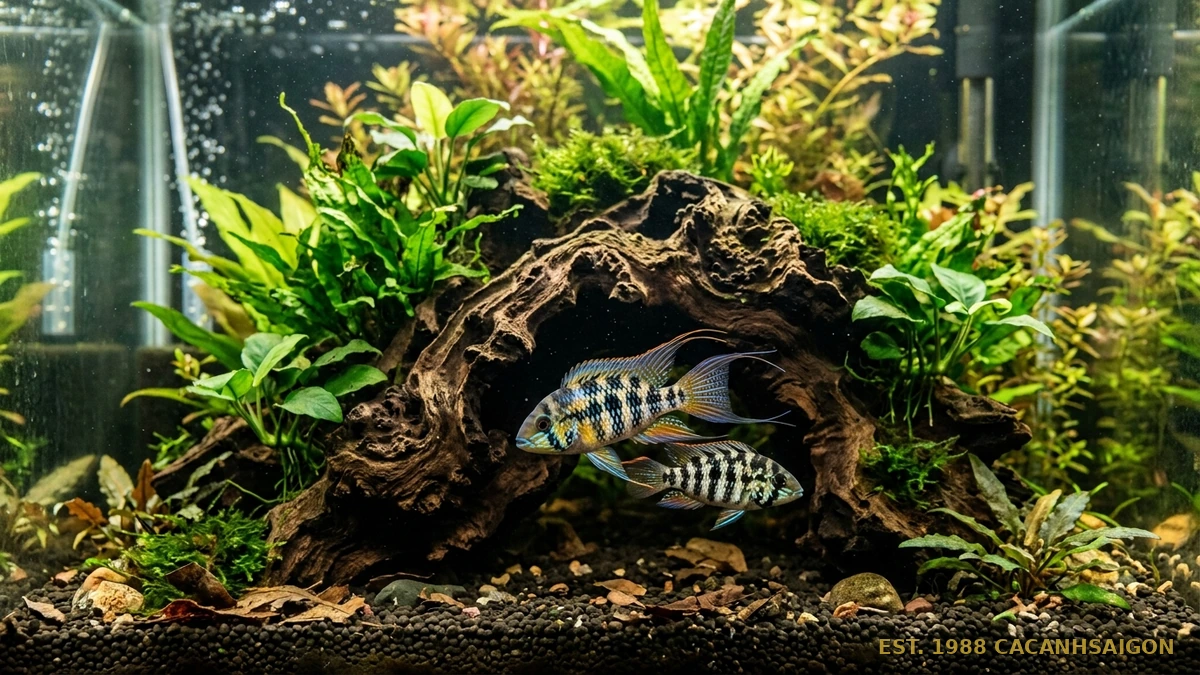
In nature, social cohesion is their primary defense mechanism against predatory piscivores. Maintaining an appropriate cohort of at least Nhóm 4 – 6 con in aquaria of 70 Liters or larger triggers natural schooling behavior, lowering cortisol levels and encouraging continuous exploration of midwater corridors.
Regarding ecosystem compatibility: This species is 100% Tuyệt đối nâng niu cây cối, completely abstaining from grazing on tender shoots or uprooting foreground carpeting plants. In terms of dwarf shrimp cohabitation, they are Khá an toàn. To safeguard newly hatched shrimplets, tanks should be densely structured with Java moss, weeping moss, or fissidens cushions.
Dietary management focuses on high-nutrient bio-availability: Provide small portions consumed within 90 seconds once or twice daily. Alternate high-grade micro-granules enriched with Spirulina and astaxanthin with live or flash-frozen Artemia nauplii and Daphnia to maximize color saturation.
4. Laboratory Specification Matrix & Empirical Parameter Ledger
The empirical reference matrix below consolidates standardized quantitative benchmarks established for Checkerboard Cichlid (Dicrossus filamentosus): Chessboard Lattice & Filagree Lyretail under laboratory conditions at Saigon Aquarium Lab:
| Quantitative Biotope Metric | Standard Laboratory Value | SGCC Technical Directive |
|---|---|---|
| SCIENTIFIC NAME & FAMILY | Dicrossus filamentosus (Cichlidae) | Valid taxonomic nomenclature and phylogenetic rank |
| NATIVE GEOGRAPHIC BIOTOPE | Rio Negro & Orinoco | Original river basins, tributaries and blackwater/clearwater habitats |
| MAXIMUM ADULT SIZE | 7.0 – 8.5 (trống), 4.5 (mái) cm | Maximum expected size under optimal captive conditions |
| MINIMUM AQUARIUM VOLUME | 70 Liters | Ensures adequate horizontal swimming corridors and bio-filtration reserve |
| OPTIMAL pH RANGE | 4.5 – 6.0 | Calibrated for compatibility with aquatic macrophytes and active soils |
| GENERAL HARDNESS (GH) | 1 – 3 dGH | Soft to moderate mineral hardness protecting gill lamellae |
| THERMAL COMFORT ZONE | 25 – 29 °C | Optimal temperature range for enzymatic digestion and metabolism |
| MINIMUM SCHOOLING SIZE | Nhóm 4 – 6 con | Reduces social stress and stimulates natural schooling cohesion |
| DWARF SHRIMP COMPATIBILITY | Khá an toàn | Compatibility index with Amano, Neocaridina and Caridina strains |
| AQUATIC PLANT SAFETY | 100% Tuyệt đối nâng niu cây cối | Zero plant grazing, zero substrate excavation or root disruption |
| DIETARY REGIMEN | Thức ăn mịn tươi sống, nước cực sạch | Balanced protein, lipid and natural carotenoid-rich formulation |
Related articles
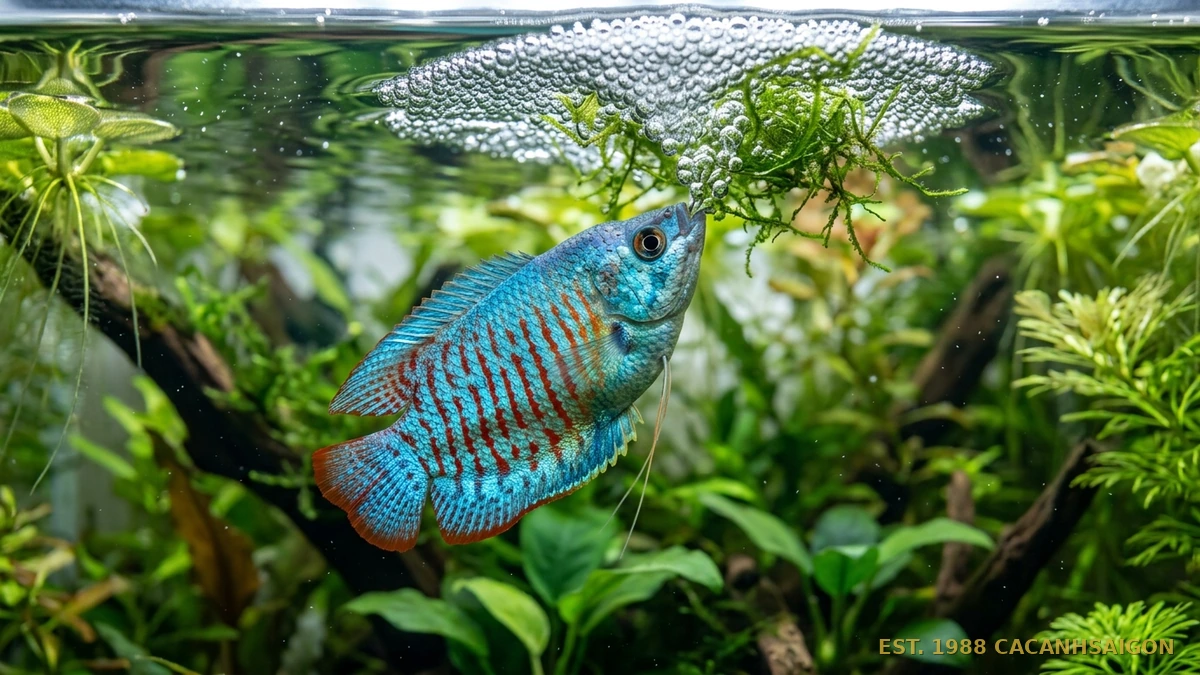
Dwarf Gourami: Turquoise Crimson Bars & Floating Bubble Nesting
Complete aquascaping care guide for Dwarf Gourami (Trichogaster lalius): Turquoise Crimson Bars & Floating Bubble Nesting (Trichogaster lalius) by...…
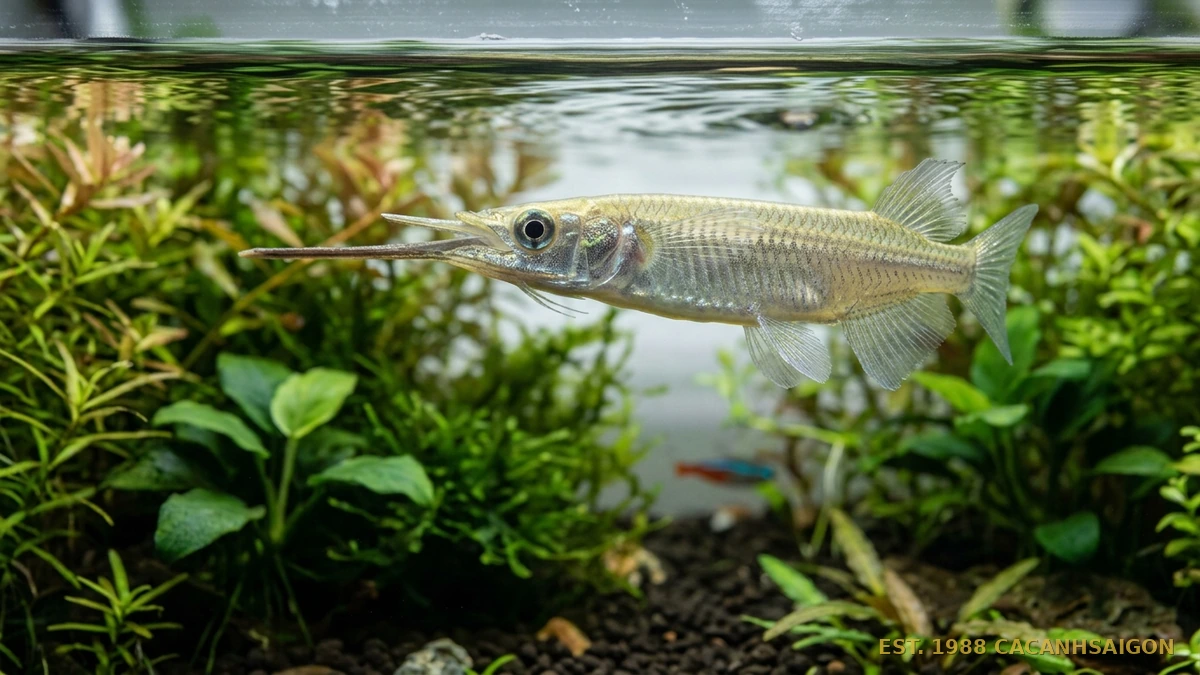
Wrestling Halfbeak: Surface Beak Predator & Territorial Displays
Complete aquascaping care guide for Wrestling Halfbeak (Dermogenys pusilla): Surface Beak Predator & Territorial Displays (Dermogenys pusilla) by...…
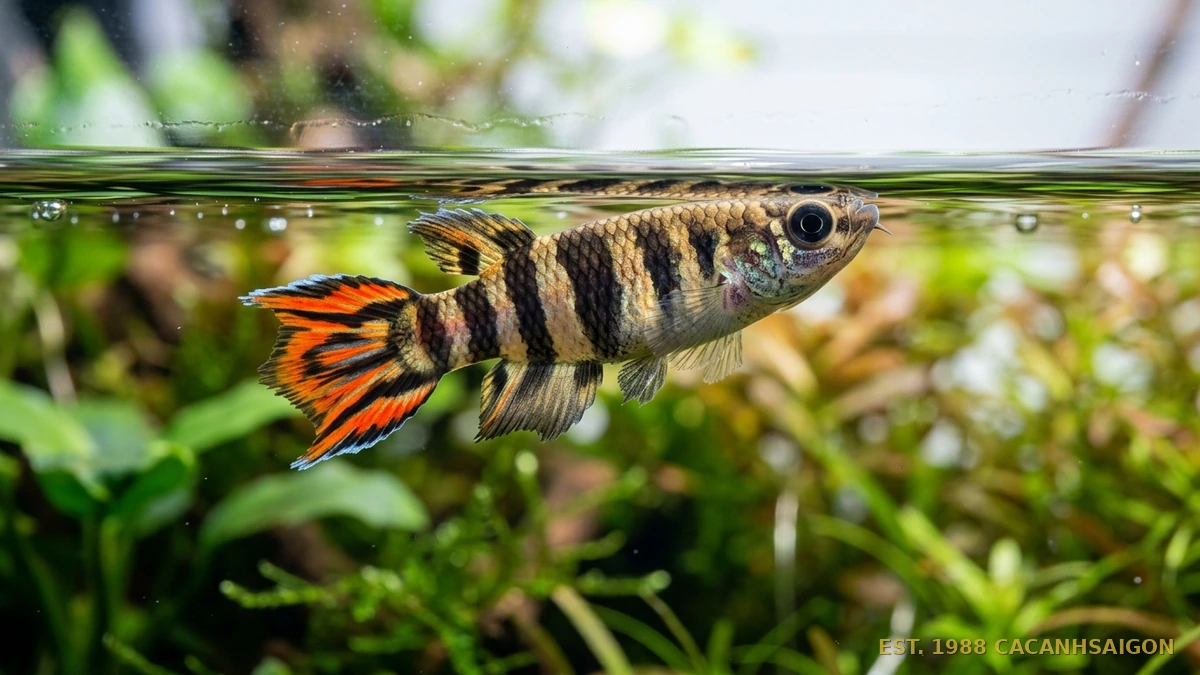
Clown Killifish: Wasp Striping & Rocket Flame Caudal at the Surface
Complete aquascaping care guide for Clown Killifish (Epiplatys annulatus): Wasp Striping & Rocket Flame Caudal at the Surface (Epiplatys annulatus) by...…
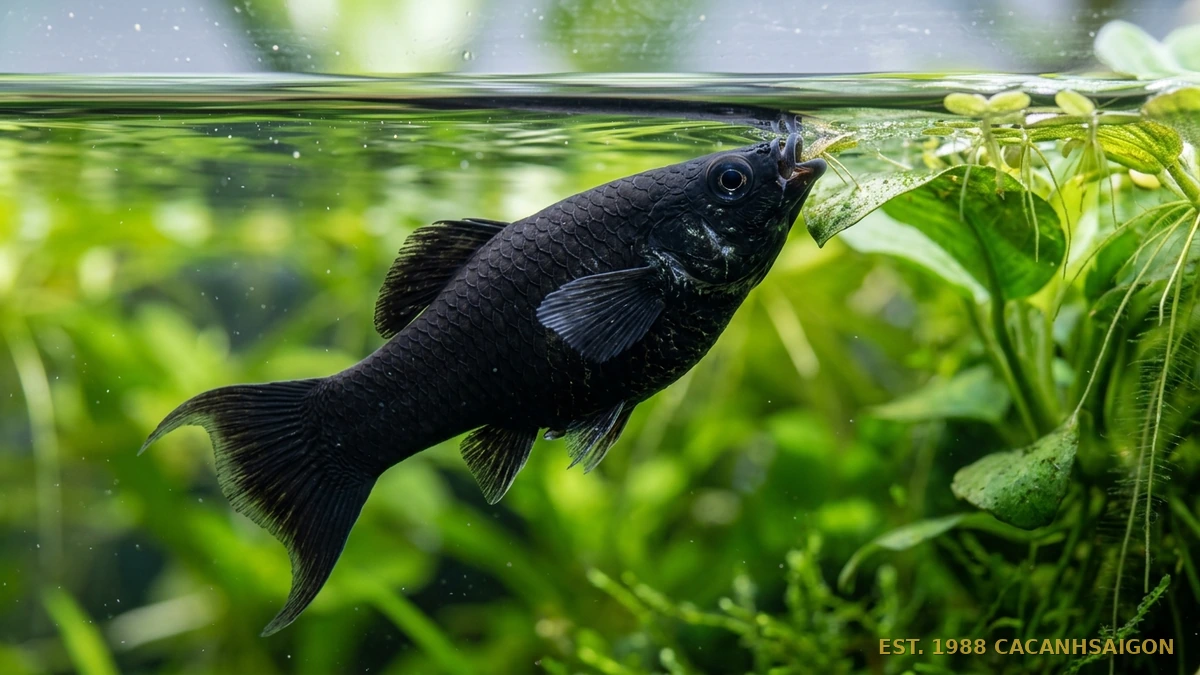
Black Molly: Premier Surface Protein Film Scavenger & Algae Pecker
Complete aquascaping care guide for Black Molly (Poecilia sphenops): Premier Surface Protein Film Scavenger & Algae Pecker (Poecilia sphenops) by...…