Caridina & Neocaridina Freshwater Shrimp Husbandry
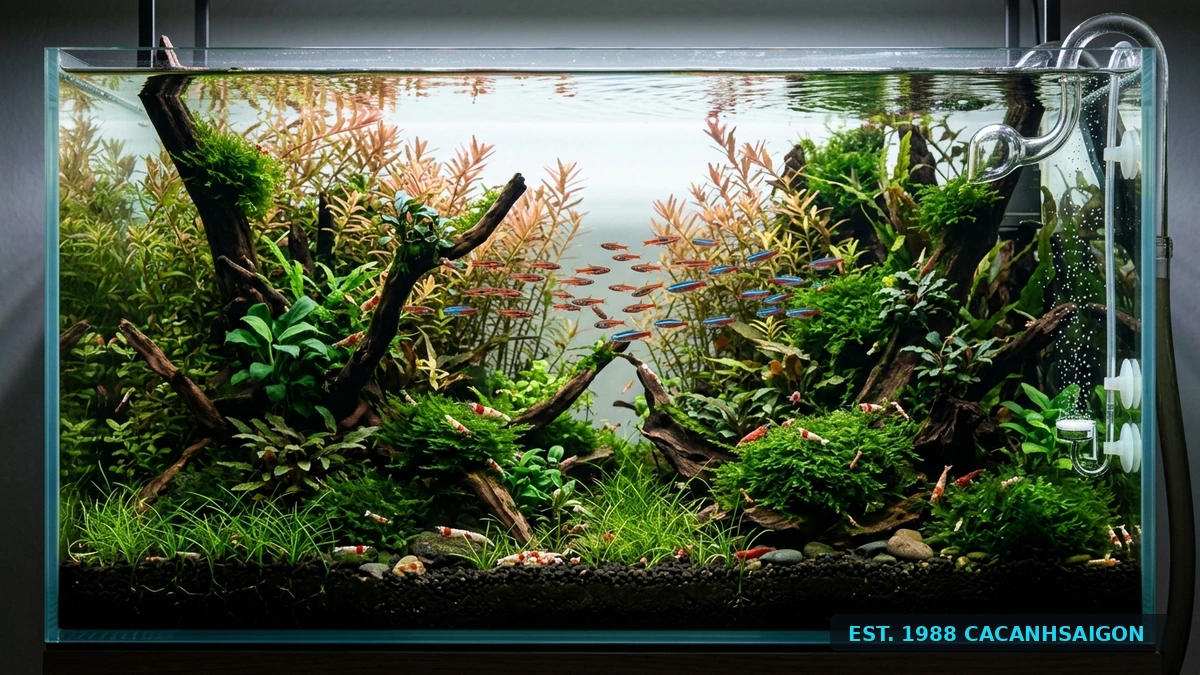
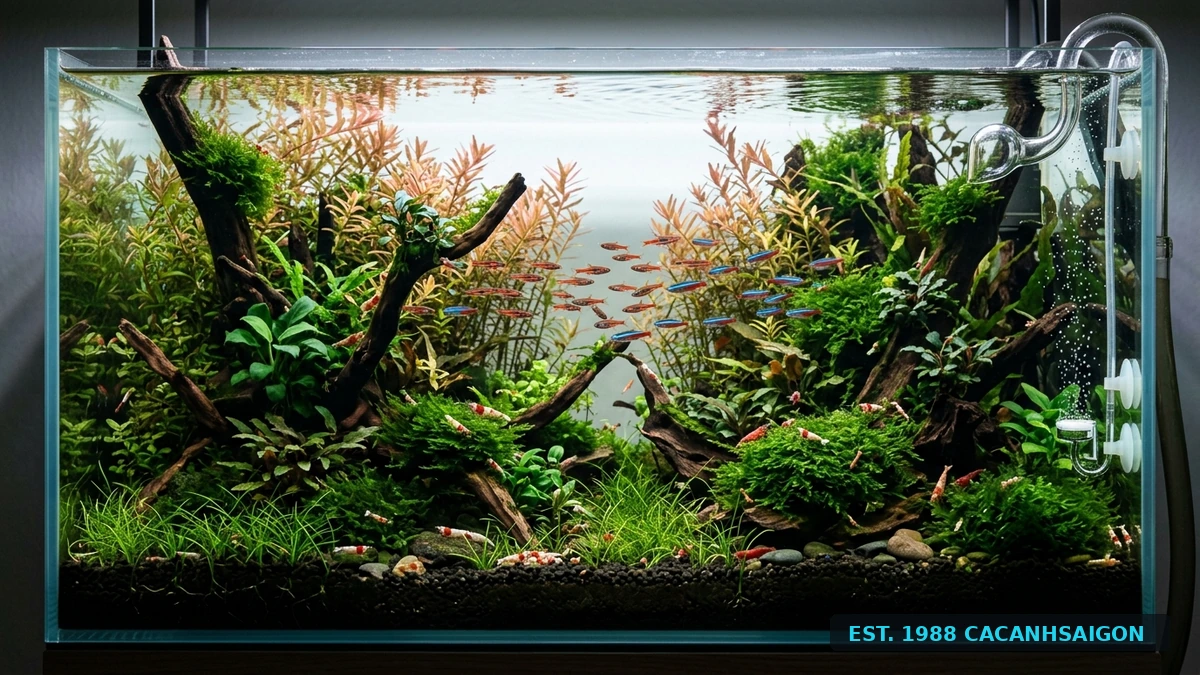
Freshwater dwarf shrimp embody exquisite aesthetic elegance and diligent detritivorous ecological function. Possessing delicate chitinous carapaces and open circulatory systems, dwarf shrimp exhibit acute sensitivity to trace heavy metals (especially copper ions) and osmotic shocks. Master the fundamental divide between the genera Caridina and Neocaridina.
1. Physicochemical Demarcation: Caridina vs Neocaridina Genera
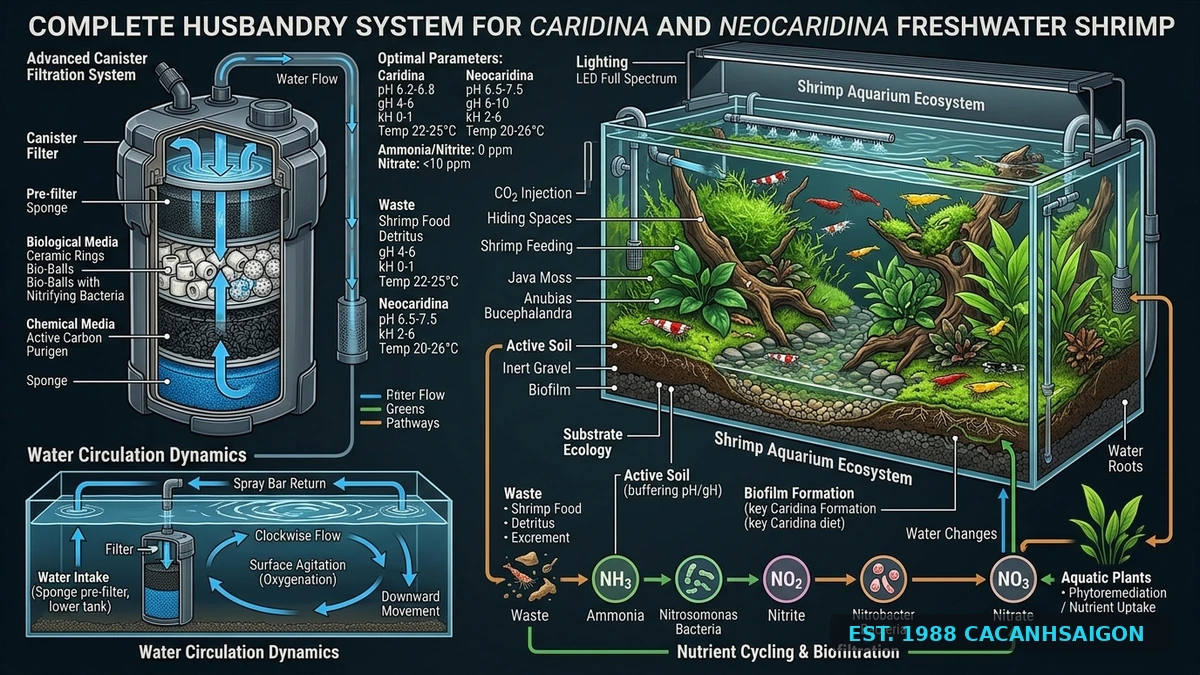
Neocaridina davidi (Cherry, Yellow, Blue Dream) exhibit broad osmotic plasticity, thriving across pH 6.8 to 7.6 with temperatures up to 28°C. Conversely, Caridina cantonensis (Crystal Red/Black, Taiwan Bee) mandate soft, acidic water maintained at pH 5.8 to 6.4, TDS 95 to 115 ppm, and chilled temperatures strictly between 22°C and 24°C.
2. Ecdysis Mechanics: Eradicating the White Ring of Death
The infamous White Ring of Death occurs when osmotic shock or calcium-magnesium deficiency impedes natural molt detachment, suffocating the shrimp inside its unyielding exuvia. Remineralize pure RO water using target-specific liquid salts to maintain general hardness strictly between 4.0 and 5.5 dGH.
3. Substrate Buffering & Bacterial Biofilm Grazing Dynamics
Juvenile shrimp rely on nutrient-rich microscopic biofilm cultivated across aged Indian almond leaves (Terminalia catappa) and porous Cholla wood. Employ undergravel filtration (UGF) paired with active buffering aquasoil to sustain stable acidic equilibrium without carbonic fluctuations.
4. Caridina vs Neocaridina Water Parameter Specification Matrix
| Physicochemical Parameter | Neocaridina (Cherry Shrimp) | Caridina (Crystal Bee / Taiwan Bee) | Hazard Alert Threshold |
|---|---|---|---|
| pH Range | 6.8 – 7.5 | 5.8 – 6.4 | Diurnal pH swing > 0.3 units |
| General Hardness (GH) | 6 – 8 dGH | 4 – 5 dGH | GH < 3 dGH (fatal molt lock) |
| Carbonate Hardness (KH) | 2 – 4 dKH | 0 – 1 dKH (mandatory zero buffer) | KH > 2 dKH for Caridina |
| Total Dissolved Solids | 150 – 220 ppm | 95 – 115 ppm | Sudden shift > 20 ppm |
| Water Temperature | 24°C – 28°C | 22°C – 24°C (chiller required) | Temperature > 28°C induces mortality |