Coral Beauty Angelfish
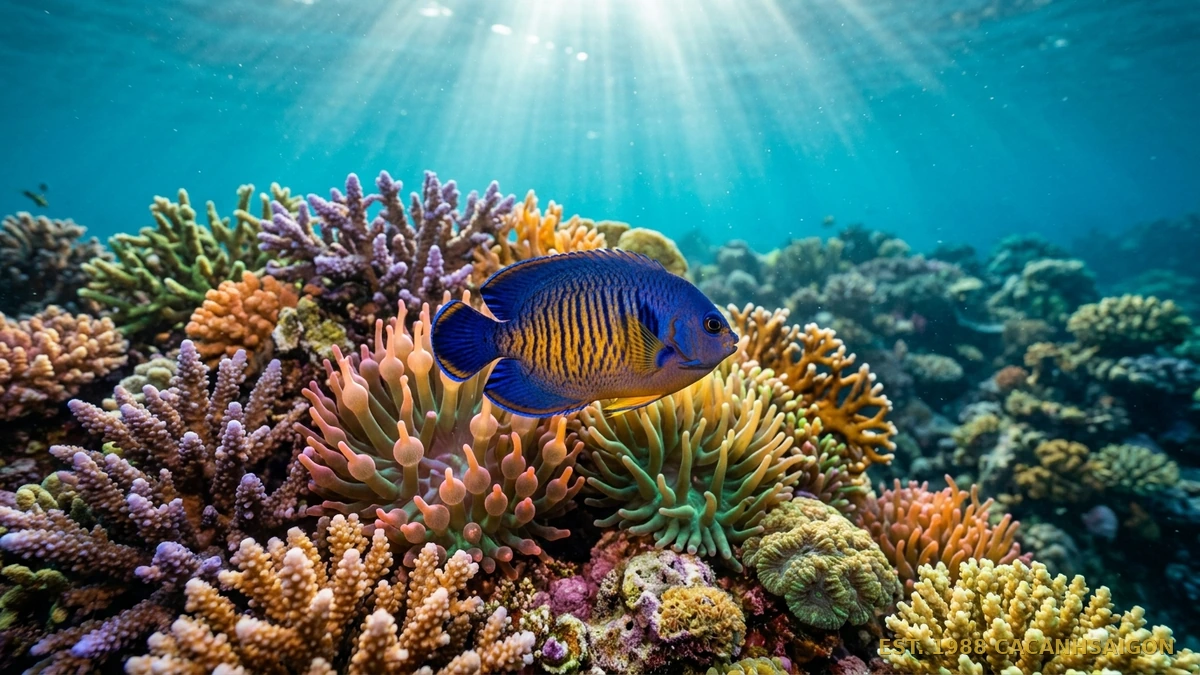
1. Natural Habitat Distribution & Morphological Characteristics of Coral Beauty Angelfish
In the wild, Coral Beauty Angelfish inhabits coral reef slopes, sheltered lagoons, and nutrient-rich rocky drop-offs across Rạn san hô Ấn Độ Dương – Thái Bình Dương. Upon reaching full maturity, individuals attain a maximum size of approximately 10.0 cm. They feature highly evolved hydrodynamic fin structures and dense chromatophore pigment layers that display vivid iridescence under reef-spectrum lighting.
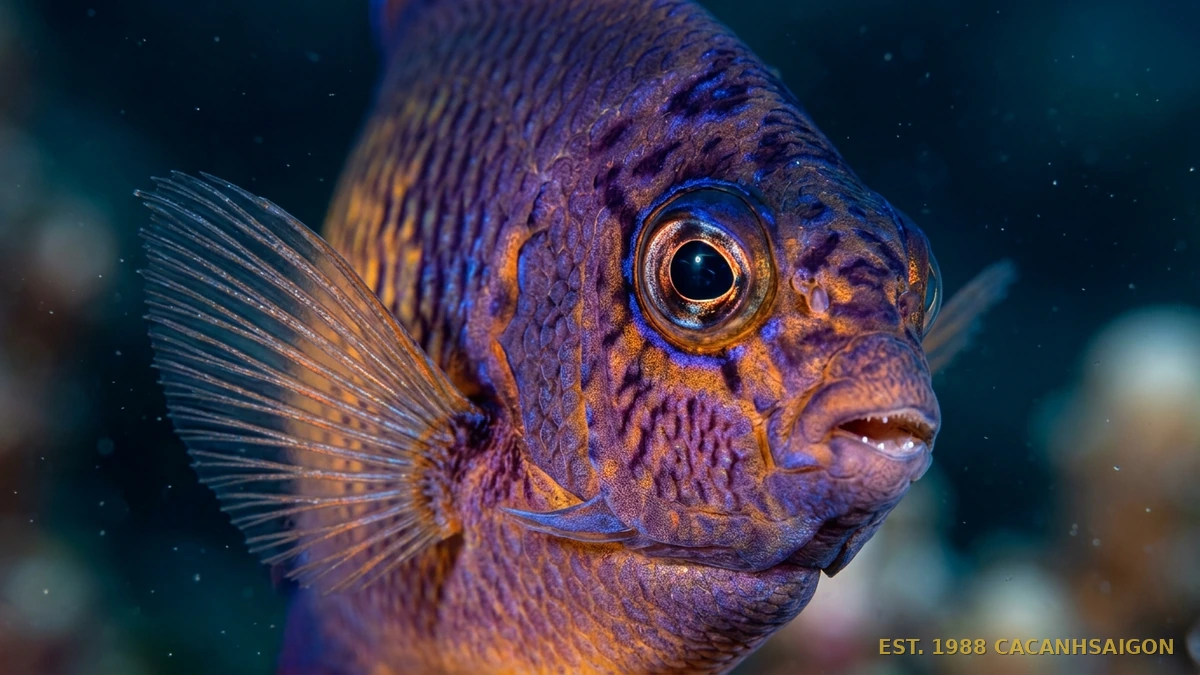
Identification traits: Sự pha trộn kỳ diệu giữa màu xanh tím hoàng hôn ở viền ngoài và màu cam hổ phách rực rỡ ở vùng trung tâm thân.. Their sensory lateral line system is exceptionally acute, allowing instantaneous navigation through live rock caverns and swift evasion of predators.
Quick Facts & Care Profile: Coral Beauty Angelfish (Centropyge bispinosa)
.sgcc-table-wrap .sgcc-facts th,
.sgcc-table-wrap table th {
background: #06253a !important;
background-color: #06253a !important;
color: #ffffff !important;
font-weight: 700 !important;
}
.sgcc-table-wrap .sgcc-facts td,
.sgcc-table-wrap table td {
color: #102330 !important;
}
| Common Name | Coral Beauty Angelfish |
|---|---|
| Scientific Name | Centropyge bispinosa |
| English Name | Coral Beauty Angelfish |
| Family | Pomacanthidae |
| Natural Origin | Rạn san hô Indian Ocean – Pacific Ocean |
| Adult Size | Approx. 10 cm (3.9 inches) |
| Ideal pH | 8.1 – 8.4 (Standard Marine Reef Alkalinity) |
| Water Temperature | 24 – 26 °C / 75 – 79 °F (Chiller Stabilized) |
| Specific Gravity & Salinity | 1.023 – 1.025 SG | 32 – 35 ppt |
| Minimum Tank Size | 150 Liters (~40 US Gallons) |
| Dietary Protocol | Omnivore (Tảo biển, giáp xác đông lạnh) |
| Reef Compatibility | Reef Safe With Caution |
| Temperament & Care | Semi-aggressive • Easy (Beginner) nhất trong họ Dwarf Angel • Active reef dweller |
2. Professional Marine Water Chemistry Standards & Parameter Equilibrium
Marine reef species require synthetic seawater that faithfully replicates open oceanic conditions. Water temperature must be maintained steadily between 24°C and 26°C (with daily fluctuations within ±0.5°C). Specific Gravity (salinity) should read 1.023 to 1.025 SG (32 – 35 ppt) via an optical refractometer, and pH stabilized between 8.1 and 8.4.
Carbonate alkalinity (dKH) must be sustained at 8.0 – 11.0 dKH, Calcium at 400 – 450 ppm, and Magnesium at 1250 – 1350 ppm to support the fish’s protective mucosal layer and promote healthy coral calcification. Ammonia (NH3) and Nitrite (NO2) must be strictly 0.0 ppm, while Nitrate (NO3) should be kept under 10 ppm via robust biological filtration and high-performance protein skimming.
3. Technical Aquarium Design & Minimum Volume Requirements (150 Liters)
To allow Coral Beauty Angelfish to thrive and exhibit its full natural swimming repertoire, the minimum recommended tank volume is 150 liters. The aquarium should be hardscaped with premium cured live rock, creating ample swim-through caves, overhangs, and nighttime crevices to provide security and eliminate acclimatization stress.
Turnover rate should reach 20 to 30 times the total tank volume per hour using a combination of a reliable DC return pump and variable-speed wavemakers. Multi-directional laminar and turbulent flow delivers dissolved oxygen to every corner while sweeping detritus toward surface overflows.
4. Daily Nutritional Protocol, Feeding Regimen & Tankmate Compatibility
The dietary classification of Coral Beauty Angelfish is categorized as: Ăn tạp (Tảo biển, giáp xác đông lạnh). In captivity, daily rations should rotate between frozen vitamin-enriched Mysis shrimp, freshly hatched Artemia, finely chopped marine shellfish, and premium marine pellets containing Spirulina, garlic extract, and stabilized Vitamin C for immune fortification.
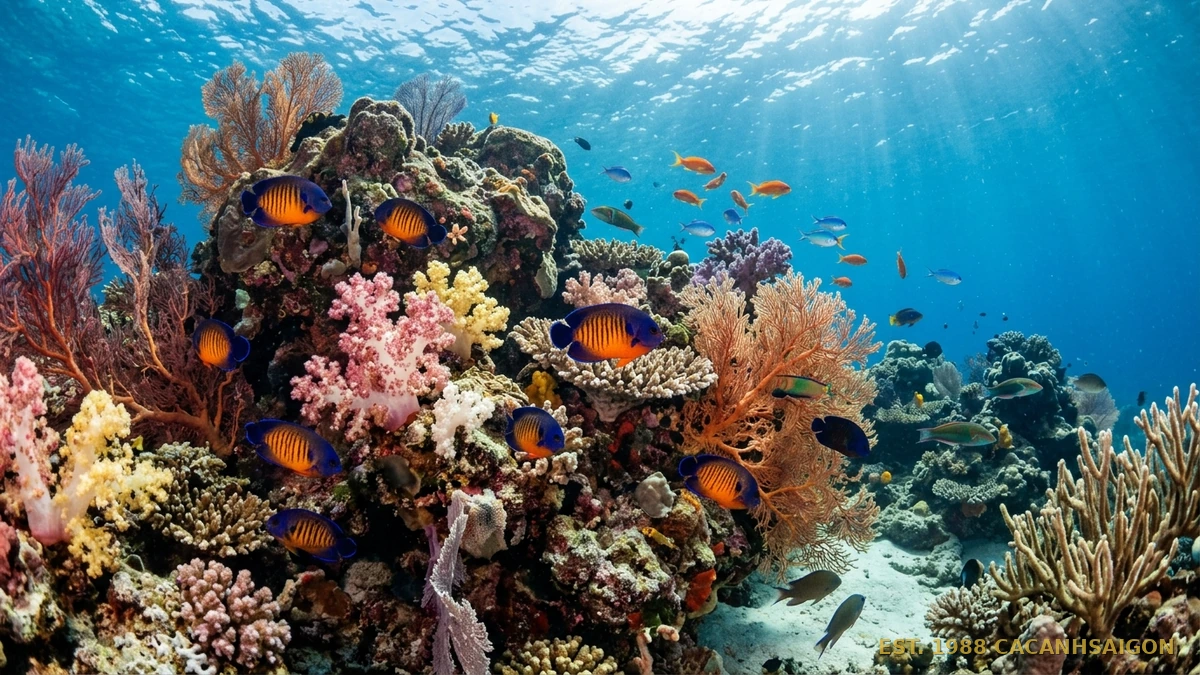
Temperament profile: Bán hung dữ. When integrated into a peaceful community reef, Coral Beauty Angelfish harmonizes well with gentle species such as clownfish, gobies, blennies, chromis, and beneficial reef cleanup crew hermits and snails. Avoid housing with aggressive predators possessing large mouth gapes or conspecifics unless the aquarium provides sufficient territorial volume.
5. Quarantine Protocol (QT) & Proactive Disease Prevention in Saltwater Systems
Every newly acquired specimen of Coral Beauty Angelfish must undergo a mandatory 14 to 21-day quarantine protocol in a dedicated observation tank prior to display tank introduction. The primary parasitic threats in marine aquaculture are Marine Ich (Cryptocaryon irritans) and Marine Velvet (Amyloodinium ocellatum), which can rapidly proliferate if the specimen suffers osmotic shock or thermal stress.
Optimal prevention involves consistent water stability, dietary garlic supplementation to stimulate feeding response, and inline UV-C sterilization or Ozone administration within the filtration sump. At the first sign of flashing or rapid gill movement, prompt intervention with hyposalinity or chelated copper therapy under careful photometer monitoring ensures total recovery.