Magma Fairy Wrasse: Complete Care Guide & Reef Tank Requirements
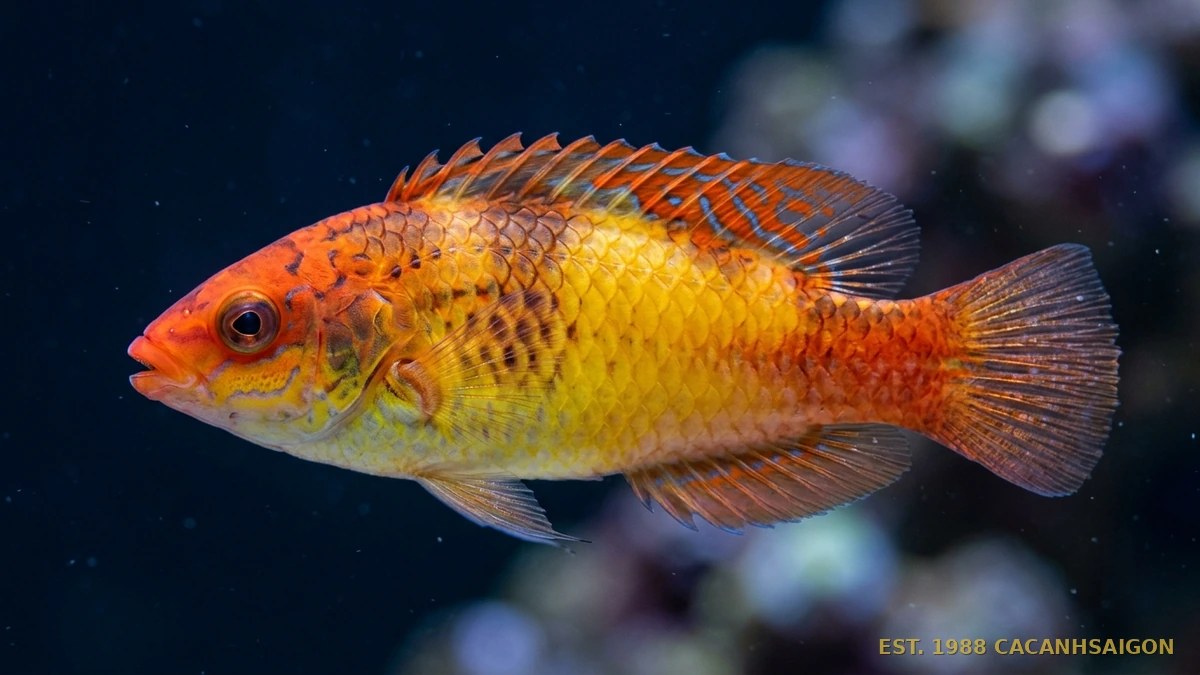
1. Biological Overview & Taxonomic Identification of Magma Fairy Wrasse
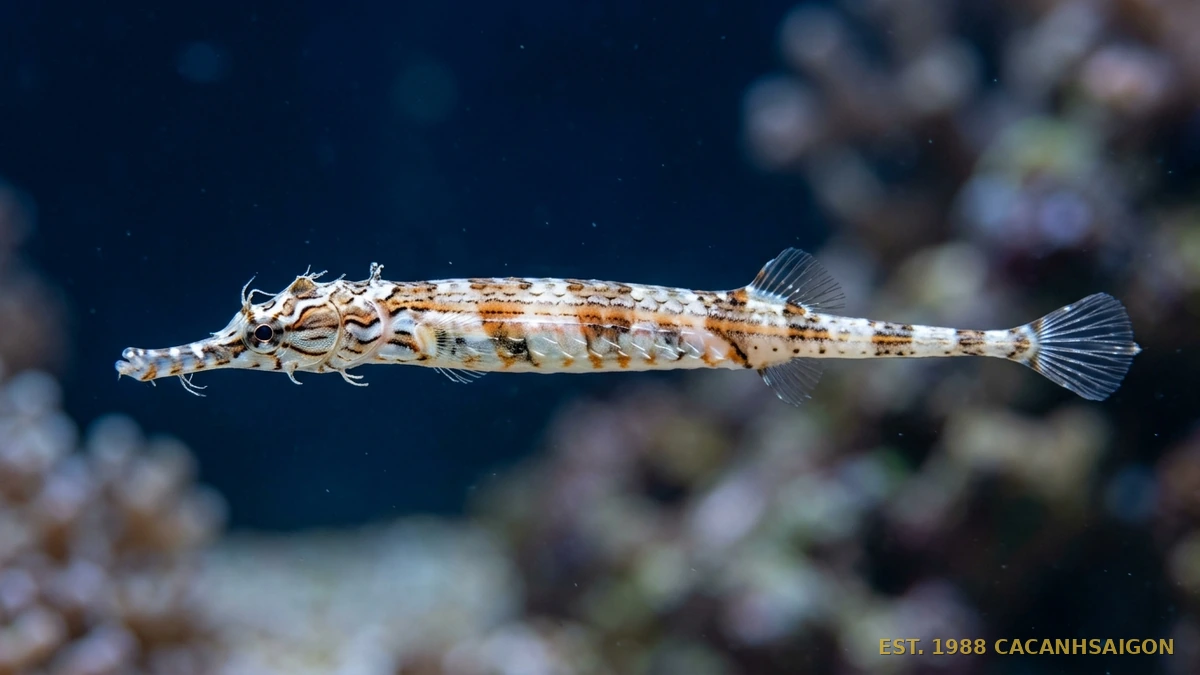
Magma Fairy Wrasse belongs to the family **Labridae**, distributed across natural coral reef formations of Philippines, Vùng núi lửa ngầm. Adult specimens reach an average length of **7.5 cm**, necessitating an aquarium volume of at least **150 Liters**. Key morphological characteristics: Sắc đỏ rực rỡ như dòng nham thạch nóng chảy từ rạn núi lửa sâu với vây lưng trong suốt điểm viền lam ngọc.
Regarding reef aquarium suitability, Magma Fairy Wrasse is rated as **Reef Safe (100% An toàn)**. Care level is categorized as **Chuyên gia (Rất quý hiếm)**, accompanied by a distinct behavioral temperament: **Hiền lành**. Maintaining optimal vitality requires stable osmotic balance, turbulent flow, and high dissolved oxygen saturation.
Quick Facts & Care Profile: Magma Fairy Wrasse (Cirrhilabrus shutmani)
.sgcc-table-wrap .sgcc-facts th,
.sgcc-table-wrap table th {
background: #06253a !important;
background-color: #06253a !important;
color: #ffffff !important;
font-weight: 700 !important;
}
.sgcc-table-wrap .sgcc-facts td,
.sgcc-table-wrap table td {
color: #102330 !important;
}
| Common Name | Magma Fairy Wrasse |
|---|---|
| Scientific Name | Cirrhilabrus shutmani |
| English Name | Magma Fairy Wrasse |
| Family | Labridae |
| Natural Origin | Philippines, Vùng núi lửa ngầm |
| Adult Size | Approx. 7.5 cm (3.0 inches) |
| Ideal pH | 8.1 – 8.4 (Standard Marine Reef Alkalinity) |
| Water Temperature | 24 – 26 °C / 75 – 79 °F (Chiller Stabilized) |
| Specific Gravity & Salinity | 1.023 – 1.025 SG | 32 – 35 ppt |
| Minimum Tank Size | 150 Liters (~40 US Gallons) |
| Dietary Protocol | Ăn mysis shrimp giàu dinh dưỡng |
| Reef Compatibility | Reef Safe (100% An toàn) |
| Temperament & Care | Peaceful • Chuyên gia (Rất quý hiếm) • Active reef dweller |
2. Water Quality Standards & Biogeochemical Balance
Reef-associated marine fish demand pristine, stable water chemistry mirroring natural pelagic ecosystems. Maintain temperature between 24°C and 26°C (with daily thermal swings under 1°C), refractometer-calibrated specific gravity at 1.023 – 1.025 SG (32 – 35 ppt salinity), and pH buffered securely within 8.1 – 8.4.
Carbonate alkalinity (dKH) must remain steady at 8 – 11 dKH, Calcium at 400 – 450 ppm, and Magnesium at 1250 – 1350 ppm to support epidermal mucous membranes. Toxic nitrogenous compounds—Total Ammonia (NH3) and Nitrite (NO2)—must be maintained at absolute 0 ppm. Nitrate (NO3) should stay below 10 ppm and Phosphate (PO4) below 0.05 ppm through high-efficiency protein skimming and UV sterilization.
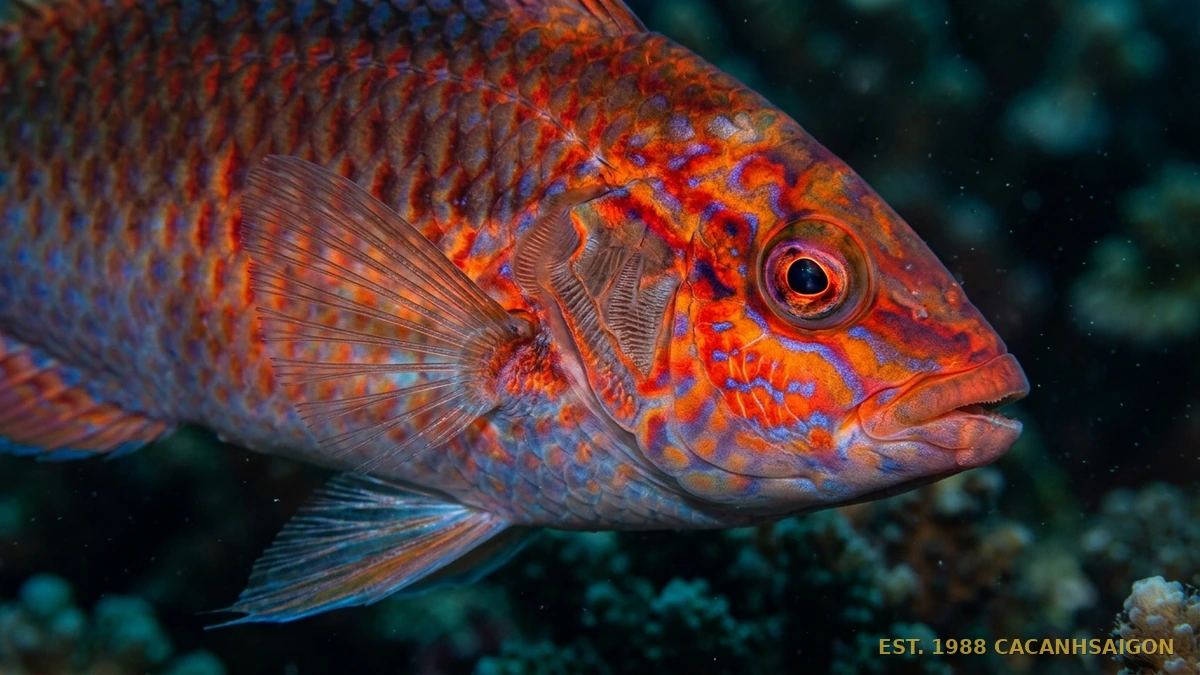
3. Aquascape Architecture & Reef Flow Dynamics
The display aquarium requires a minimum volume of **150 Liters**. Aquascaping should feature highly porous live rock or cured ceramic reef structures, engineered with numerous caves, swim-through arches, and nocturnal crevices. Preserve generous open swimming lanes in the midwater and foreground zones.
Sub-tank filtration should incorporate an appropriately sized needle-wheel protein skimmer, premium biological media (Matrix or bio-spheres), and full-spectrum reef illumination (15000K – 20000K). Programmable wavemakers generating turbulent gyre currents ensure debris suspension and gas exchange.
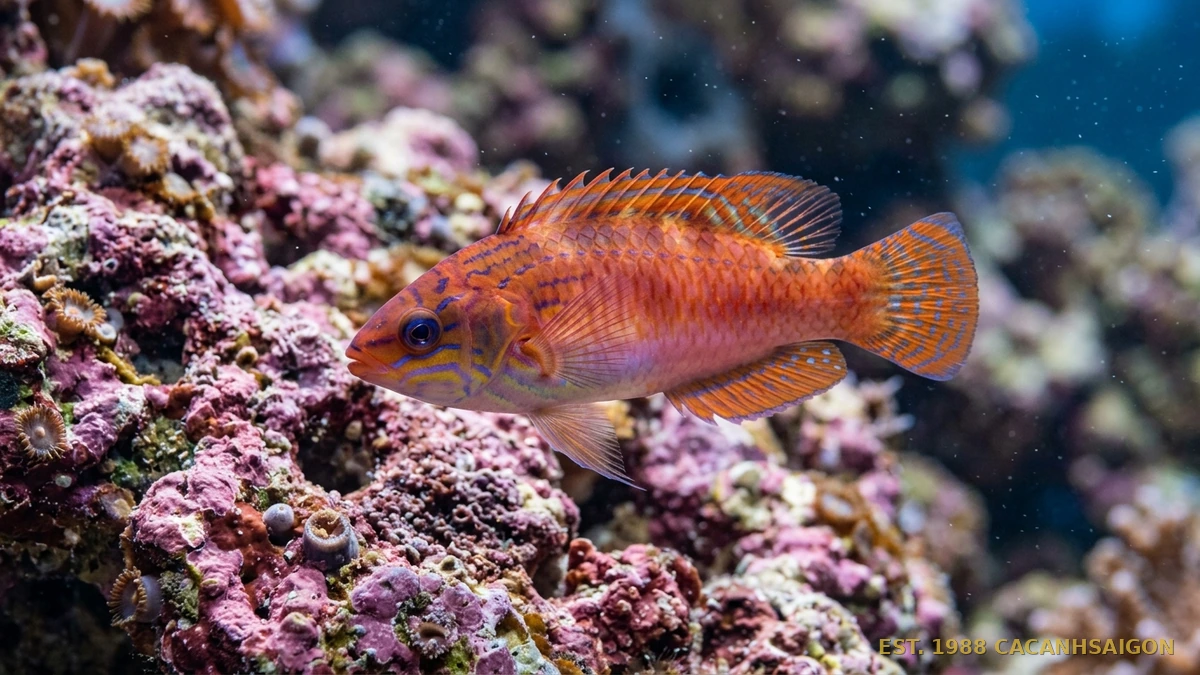
4. Nutritional Protocol & Community Tankmate Selection
Dietary classification: **Ăn mysis giàu dinh dưỡng**. In captive care, provide a varied rotation of vitamin-enriched frozen fare (mysis shrimp, enriched brine shrimp, finely chopped marine meats) complemented by high-protein marine pellets formulated with spirulina, marine garlic extract, and stabilized Vitamin C.
Social compatibility: **Hiền lành**. When housed in community systems, Magma Fairy Wrasse thrives alongside docile companions including clownfish, peaceful gobies, blennies, fairy wrasses, and utilitarian reef cleanup snails. Avoid aggressive apex predators capable of harassing or consuming smaller reef residents.
5. Quarantine Protocol & Saltwater Prophylaxis
Newly acquired marine fish are vulnerable to pervasive marine pathogens, notably Marine Ich (Cryptocaryon irritans), Marine Velvet (Amyloodinium ocellatum), and bacterial infections. A dedicated 30-day biosecurity quarantine protocol in an un-medicated, fully cycled observation system is mandatory prior to main reef introduction.
During quarantine, closely observe opercular respiration, fin transparency, and enthusiastic feeding responses. Fortify rations with beta-glucan and garlic oil to reinforce natural mucosal defense. Prompt application of controlled hyposalinity protocols or chelated copper therapy under careful photometer monitoring ensures total recovery.