Planted Aquarium Lighting
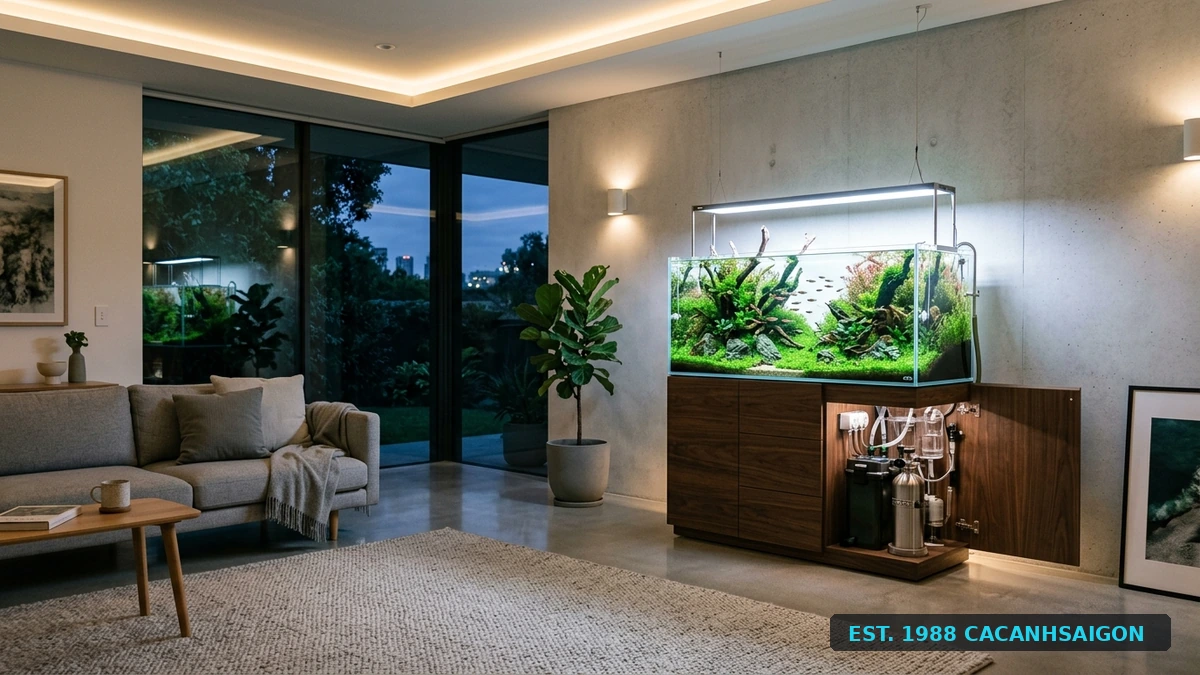
Lighting in the modern planted aquarium is both an energy source and a trigger for biochemical cascades. Merely evaluating lighting by wattage or visual lumens is a critical amateur error. Aquatic plant chloroplasts utilize specific electromagnetic wavelengths (Photosynthetically Active Radiation – PAR). Here is our engineering breakdown of photon flux, chlorophyll peaks, and diurnal cycles.
1. PAR vs PUR: Quantum Photon Flux Density (PPFD)
Photosynthetically Active Radiation covers the 400nm to 700nm waveband. Photosynthetically Usable Radiation (PUR) represents the precise sub-bands absorbed by chlorophyll a and b (peaks at 430nm royal blue and 660nm deep red). High PAR without targeted PUR merely feeds nuisance green dust and brush algae without enhancing stem plant pigment synthesis.
2. WRGB LED Architecture & Deep Red (660nm) Pigment Activation
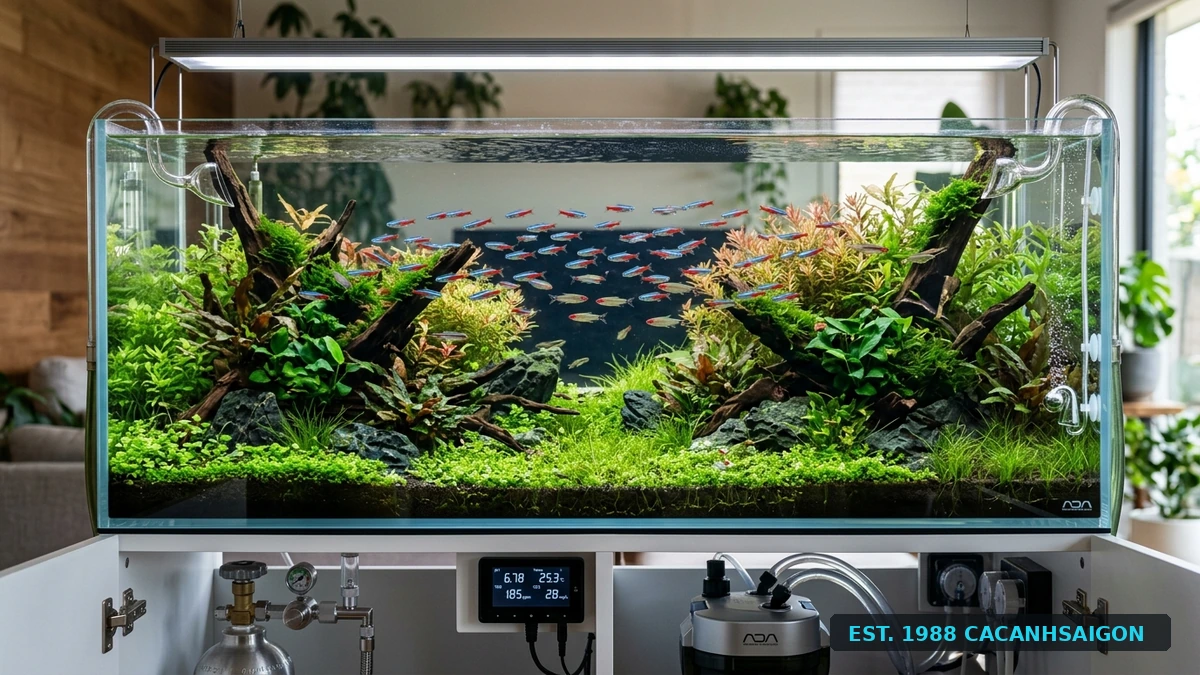
Premium WRGB lighting fixtures utilize dedicated 660nm deep-red and 450nm royal-blue LED diodes combined with high-CRI white diodes. The 660nm wavelength penetrates water columns efficiently, triggering anthocyanin and carotenoid production in red species like Rotala macrandra and Ludwigia pantanal.
3. The Siesta Photoperiod: CO2 Replenishment & Algae Suppression
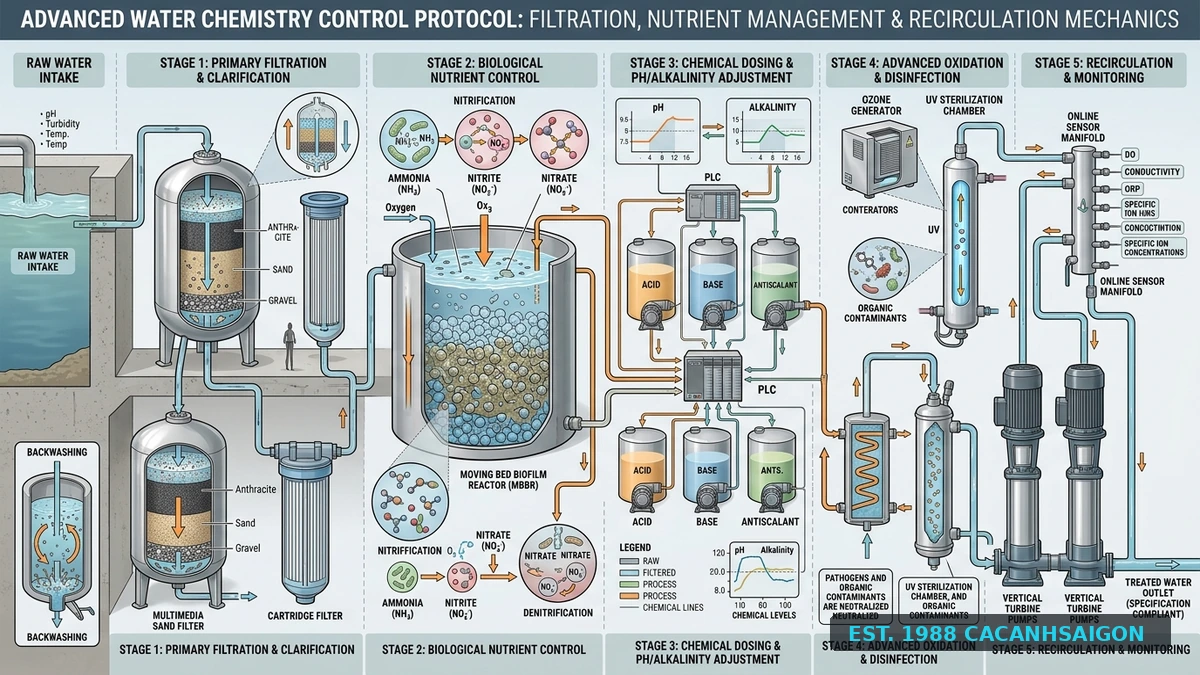
Rather than running continuous 10-hour cycles that exhaust dissolved carbon dioxide by midday, employ an 8-hour split photoperiod (4 hours ON, 2 hours OFF, 4 hours ON) or a 7-hour continuous high-intensity window. The lighting pause allows bio-nitrification and natural respiration to regenerate ambient dissolved CO2, starving phototrophic algae.
4. PAR Requirements & Spectrum Benchmark Matrix
| Plant Category | PAR at Substrate | Recommended Spectrum | Ideal Photoperiod |
|---|---|---|---|
| Low-Tech (Anubias, Java Fern, Crypts) | 25 – 45 µmol/m²/s | Cool White (6500K) + Green boost | 6 – 7 Hours |
| Medium-Tech (Bucephalandra, Mosses, Stem) | 50 – 80 µmol/m²/s | RGB / WRGB balanced | 7 – 8 Hours |
| High-Tech Red Stems (Rotala, Ludwigia) | 90 – 150 µmol/m²/s | WRGB with 660nm Deep Red peak | 7 – 8 Hours (with CO2) |
| High-Demand Carpeting (HC Cuba, Glossostigma) | 110 – 180 µmol/m²/s | High PAR WRGB with wide optics | 8 Hours (with high CO2) |