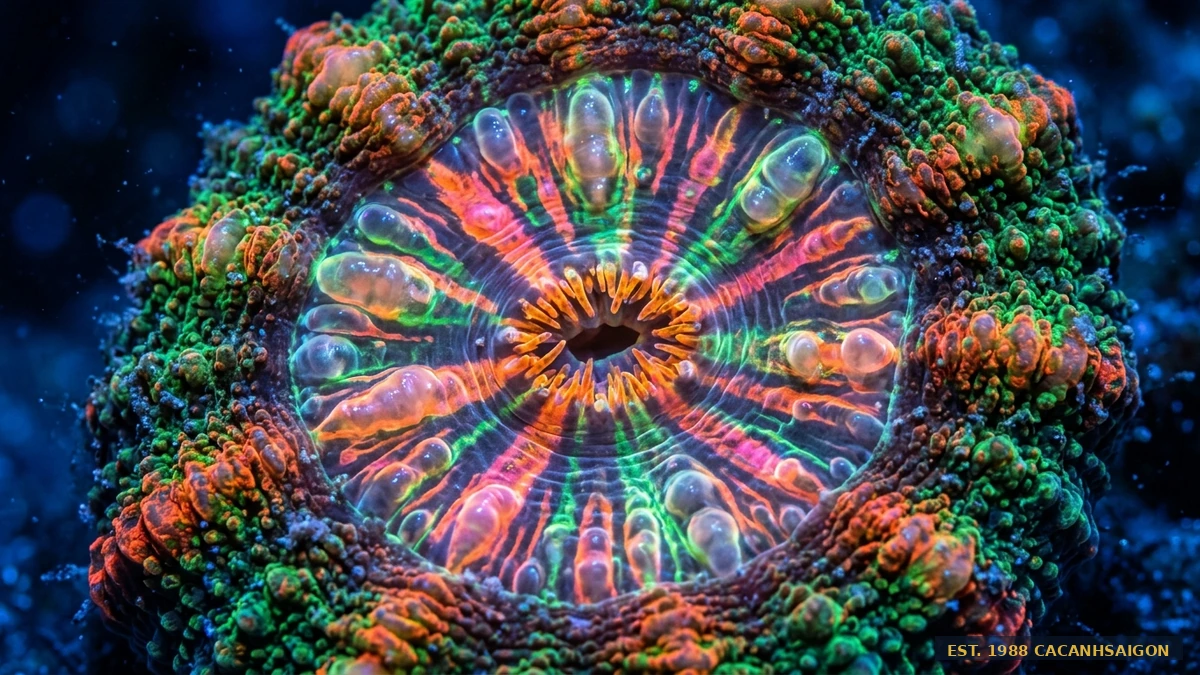
Blue Raven coral care guide and water parameters
1. Taxonomic Classification, Biotope Origin & Morphological Characteristics
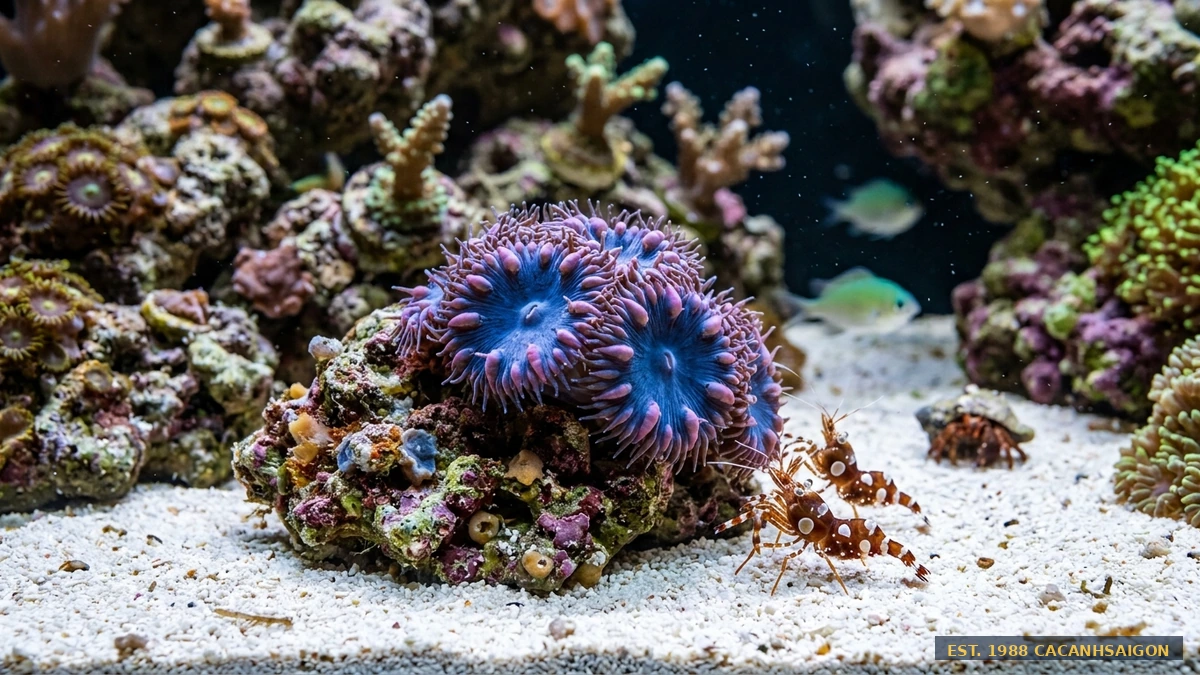
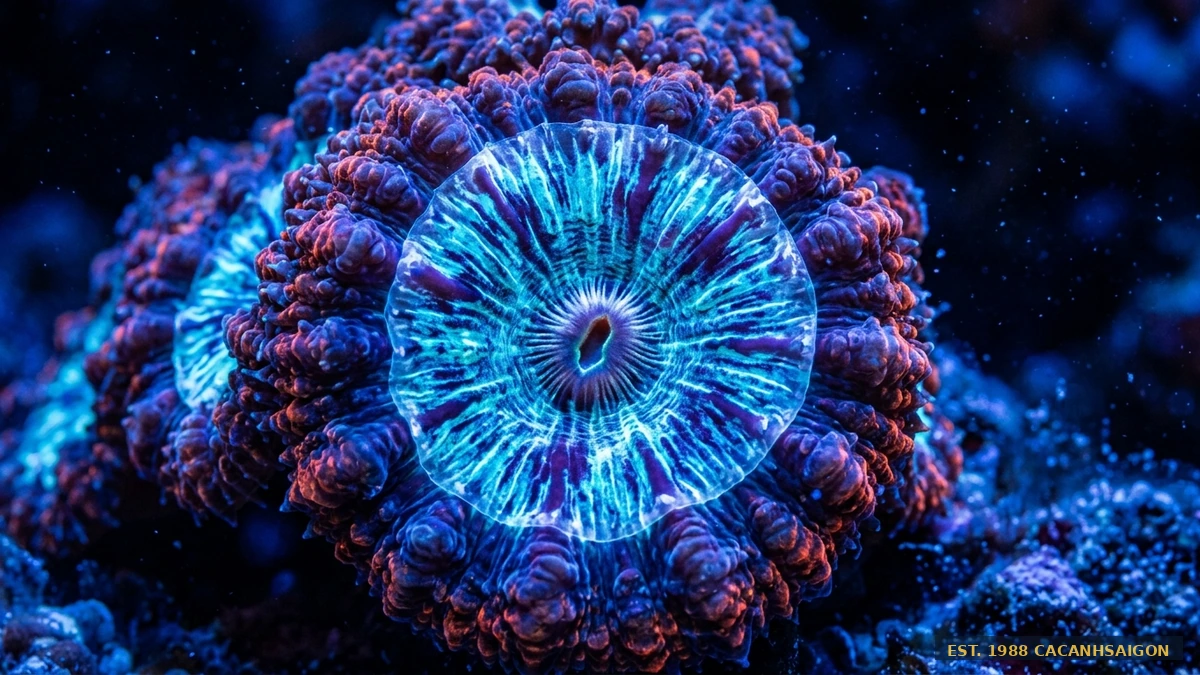
Blue Raven Blastomussa Coral (taxonomically classified as Blastomussa wellsi ‘Blue Raven’ within the family Lobophylliidae) represents one of the most structurally fascinating taxa inhabiting shallow to mid-depth coral reefs across Indonesia. In its native biotope, colonies establish sprawling skeletal matrices that serve as crucial micro-habitats for diverse marine cryptofauna and commensal crustacean species.
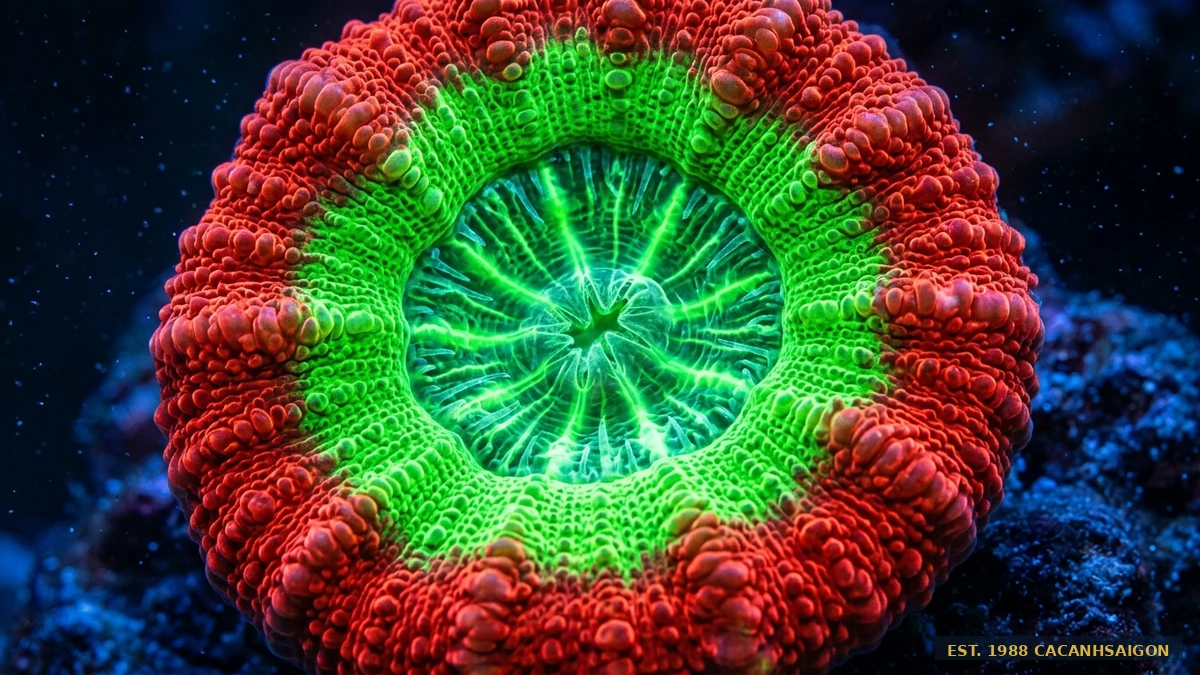
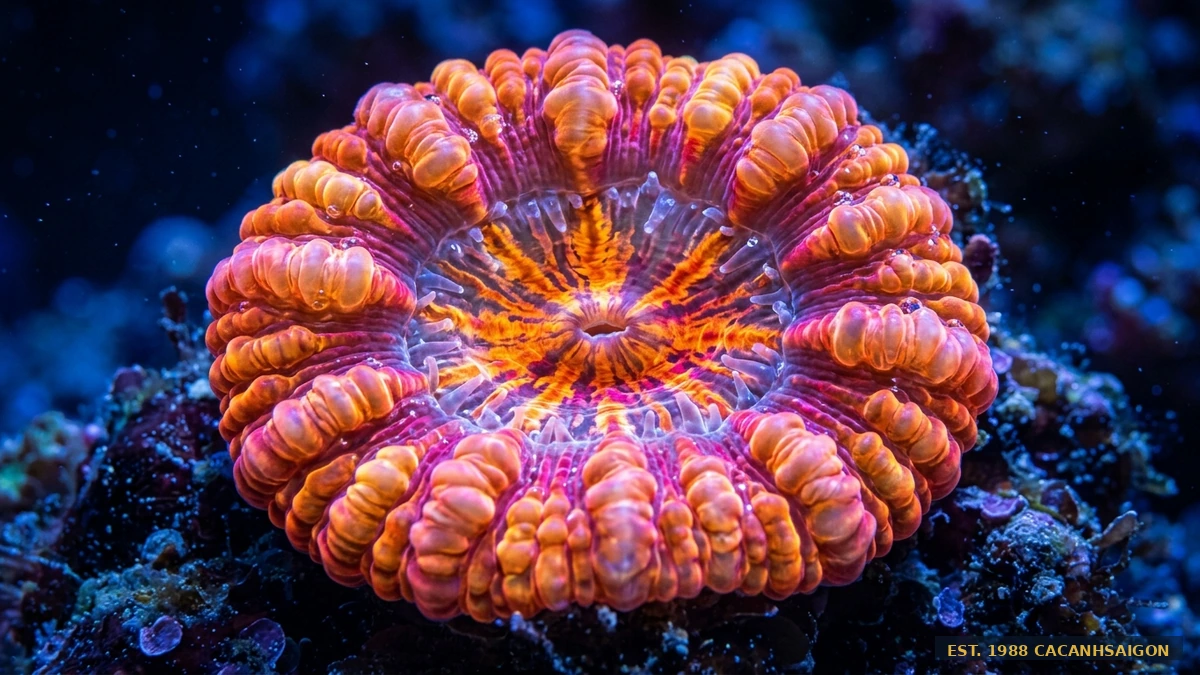
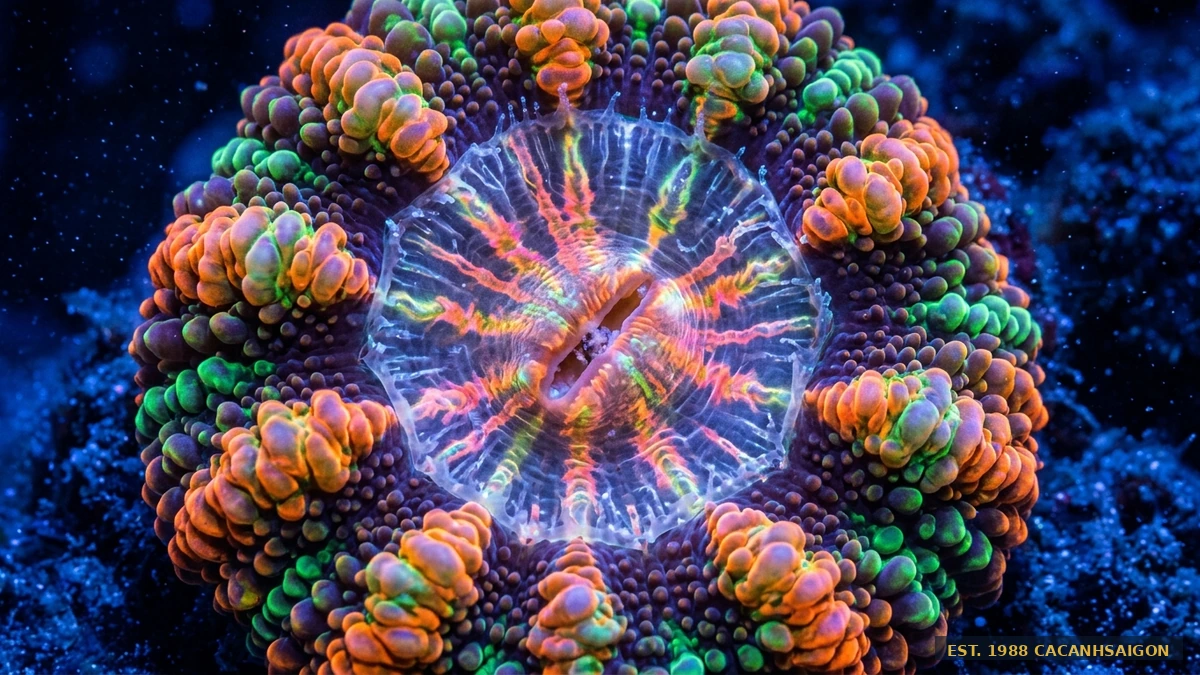
Morphologically, this specimen features finely sculpted corallites embedded within an aragonite matrix. Under specialized actinic wavelength excitation (420–460 nm), fluorescent proteins (GFP and RFP homologs) concentrated in the oral disc and tentacle tips exhibit brilliant chromatic radiance, serving both as photo-protective sunscreens and energy-harvesting pigments for internal endosymbionts.
Reef Husbandry & Water Parameters: Blue Raven Blastomussa Coral (Blastomussa wellsi ‘Blue Raven’)
| Common Name | Blue Raven Blastomussa Coral |
|---|---|
| Scientific Name | Blastomussa wellsi ‘Blue Raven’ |
| Coral / Flora Group | LPS Thể Khối & Đĩa Tròn (Scolymia, Acantho, Cynarina) |
| Taxonomic Family | Lobophylliidae |
| Natural Biotope / Origin | Indonesia |
| PAR Light Intensity | 50 – 100 µmol/m²/s (Actinic + Daylight Spectrum) |
| Water Flow Dynamics | Nhẹ, êm (Random Turbulent Pulses) |
| Optimal Reef Placement | Tầng đáy rạn |
| Alkalinity Target | 8.0 – 8.6 dKH (Ultra-stable daily consumption) |
| Calcium Target | 420 – 440 ppm |
| Magnesium Target | 1300 – 1350 ppm |
| Husbandry Difficulty | Beginner Friendly |
| Aggression & Sweepers | Hiền lành |
| Nutritional Protocol | Rất thích ăn mysis tôm vụn, LPS pellets định kỳ 1-2 lần/tuần bằng ống bóp chuyên dụng |
2. Photosynthetic PAR Mapping & Hydrodynamic Flow Dynamics
Successful long-term cultivation of Blastomussa wellsi ‘Blue Raven’ hinges upon delivering an accurate Photosynthetically Active Radiation (PAR) flux ranging from 50 – 100 µmol/m²/s. Utilizing a combination of high-output marine LED fixtures and T5 actinic supplementary tubes ensures broad-spectrum coverage without generating localized hotspot bleaching or photo-inhibition.
In tandem with light energy, hydrodynamic flow must be calibrated to Nhẹ, êm. Unidirectional laminar currents must be strictly avoided; instead, programmable wavemakers operating on alternating gyre or pulse schedules should wash across the colony from multiple vectors. This facilitates boundary-layer gas exchange, accelerates calcification, and prevents organic detritus sedimentation from suffocating delicate polyps.
3. Water Chemistry Targets: Alkalinity, Calcium, Magnesium & Trace Ions
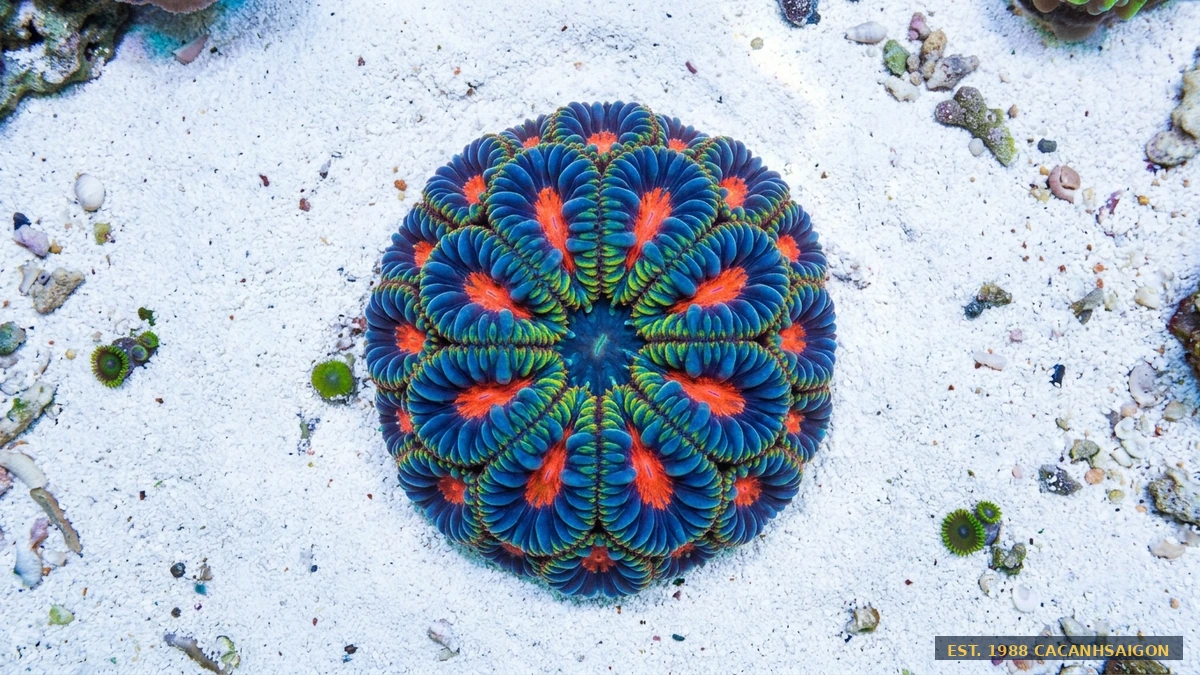
Reef-building organisms rely on closed-loop stability across all macro-mineral vectors. The target parameters for maintaining Blastomussa wellsi ‘Blue Raven’ in captive closed loops require an Alkalinity of 8.0 – 8.6 dKH, Calcium concentration of 420 – 440 ppm, and Magnesium maintained at 1300 – 1350 ppm. Daily fluctuations in dKH must not exceed 0.3 units to avert sudden tissue necrosis (STN/RTN).
In addition to the Big Three foundation elements, trace elemental supplementation—specifically Strontium, Potassium, Iodine, and bioactive Fluoride—stimulates chromoprotein synthesis and stabilizes skeletal density. Maintaining an ultra-low nutrient environment (NO3: 2–5 ppm, PO4: 0.02–0.05 ppm) while providing adequate dissolved organic nutrition strikes the optimal equilibrium between vivid coloration and rapid skeletal propagation.
4. Nutritional Protocol, Symbiotic Zooxanthellae & Ecosystem Harmony
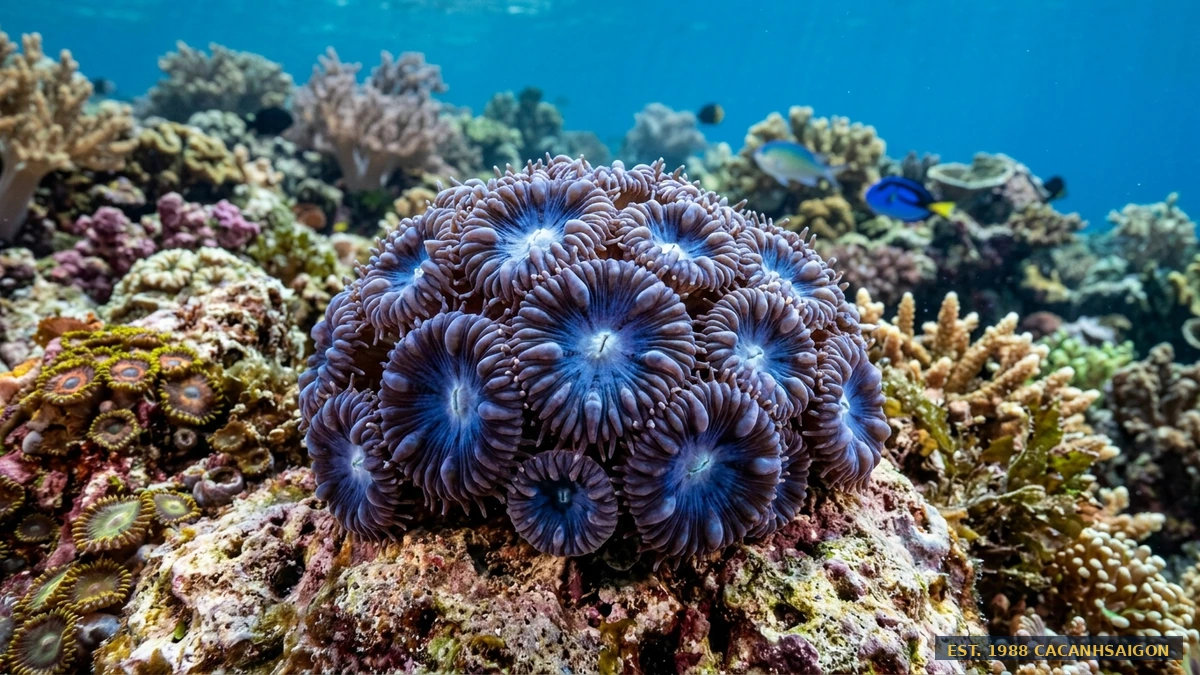
The primary energetic pathway for Blastomussa wellsi ‘Blue Raven’ is phototrophic synthesis powered by endosymbiotic dinoflagellates (Symbiodiniaceae). However, supplemental micro-heterotrophic feeding profoundly enhances tissue depth and tentacular vigor. Rất thích ăn mysis tôm vụn, LPS pellets định kỳ 1-2 lần/tuần bằng ống bóp chuyên dụng
In terms of territorial temperament, this species is rated as Hiền lành. Position the colony at Tầng đáy rạn with a minimum clearance buffer of 8–12 cm from adjacent cnidarian colonies to prevent chemical warfare or contact stinging from mesenterial filaments. Adhering to these professional husbandry guidelines ensures breathtaking vitality and long-term thriving in any advanced reef biotope.