Indo Gold Torch Coral Reef Care Guide & Water Parameters
1. Taxonomic Classification, Biotope Origin & Morphological Characteristics
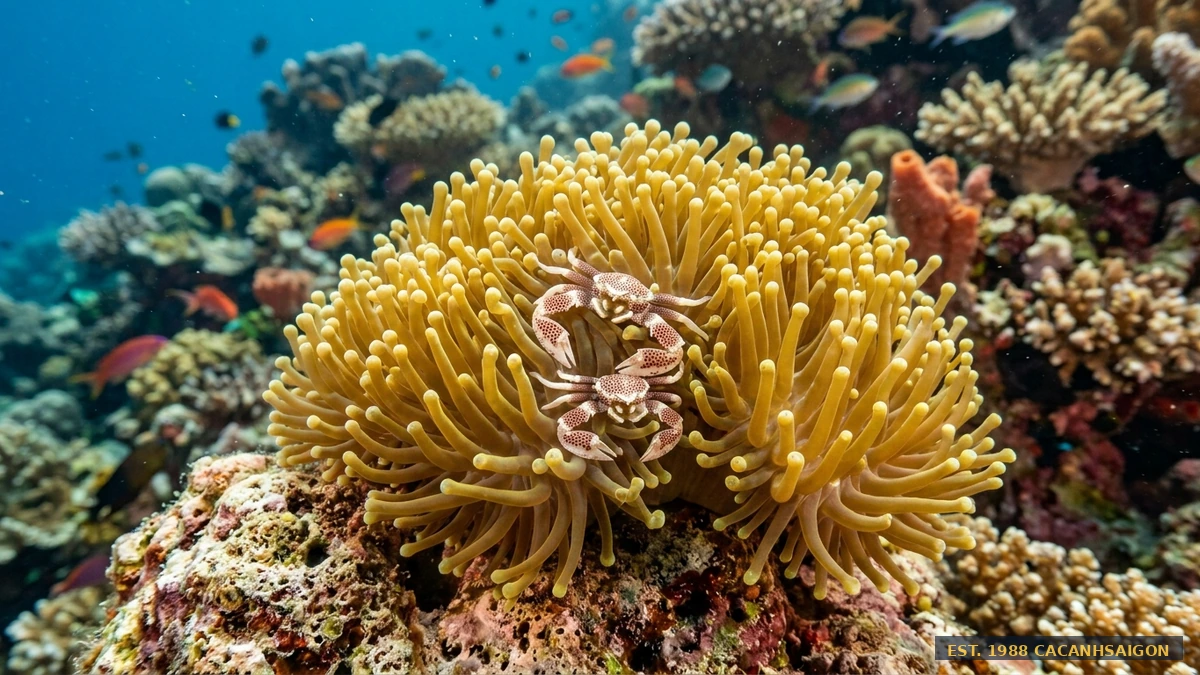
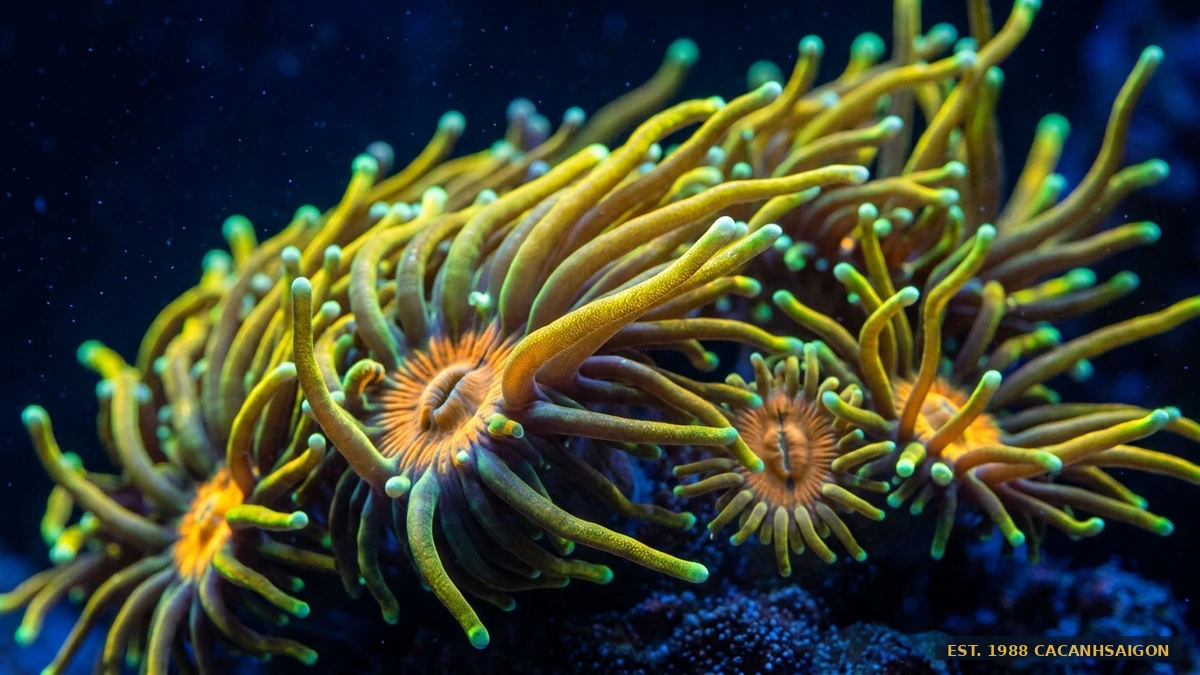
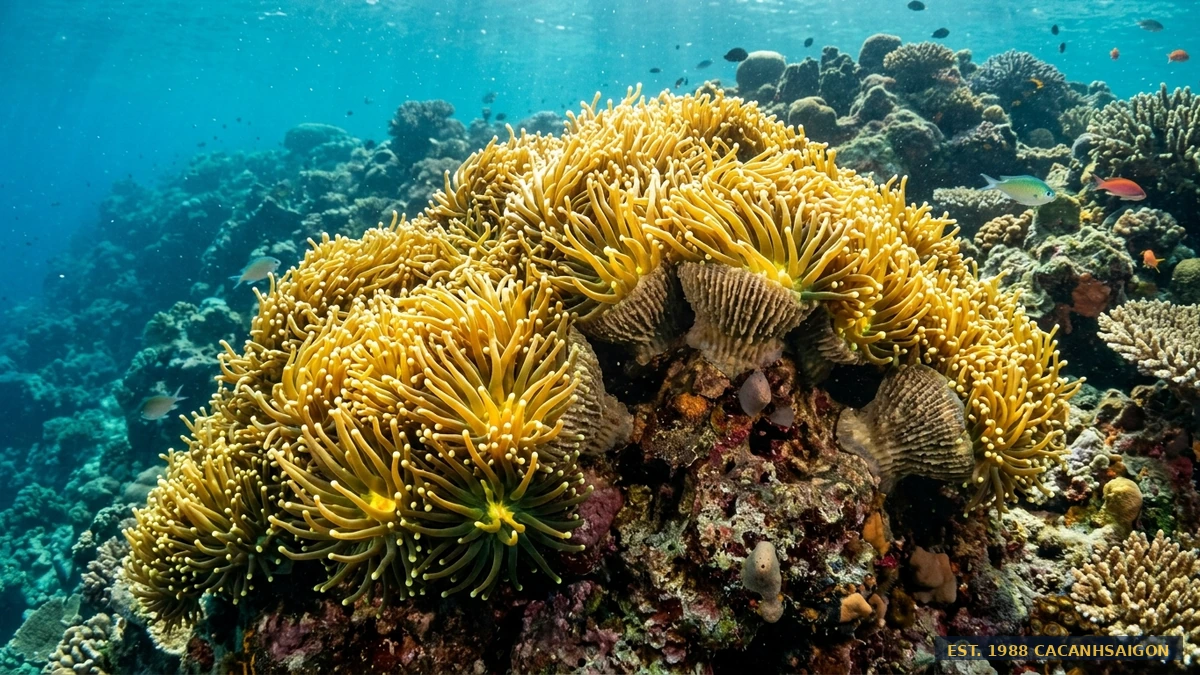
Indo Gold Torch Coral (taxonomically classified as Euphyllia glabrescens ‘Indo Gold’ within the family Euphylliidae) represents one of the most structurally fascinating taxa inhabiting shallow to mid-depth coral reefs across Indonesia. In its native biotope, colonies establish sprawling skeletal matrices that serve as crucial micro-habitats for diverse marine cryptofauna and commensal crustacean species.
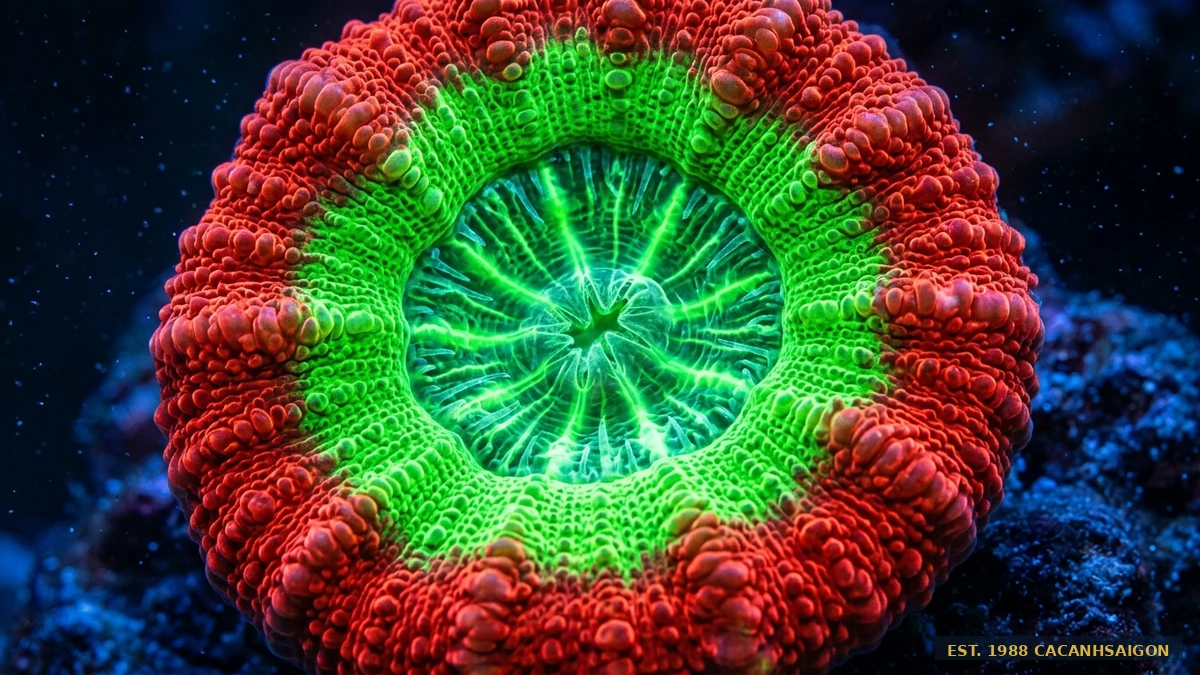
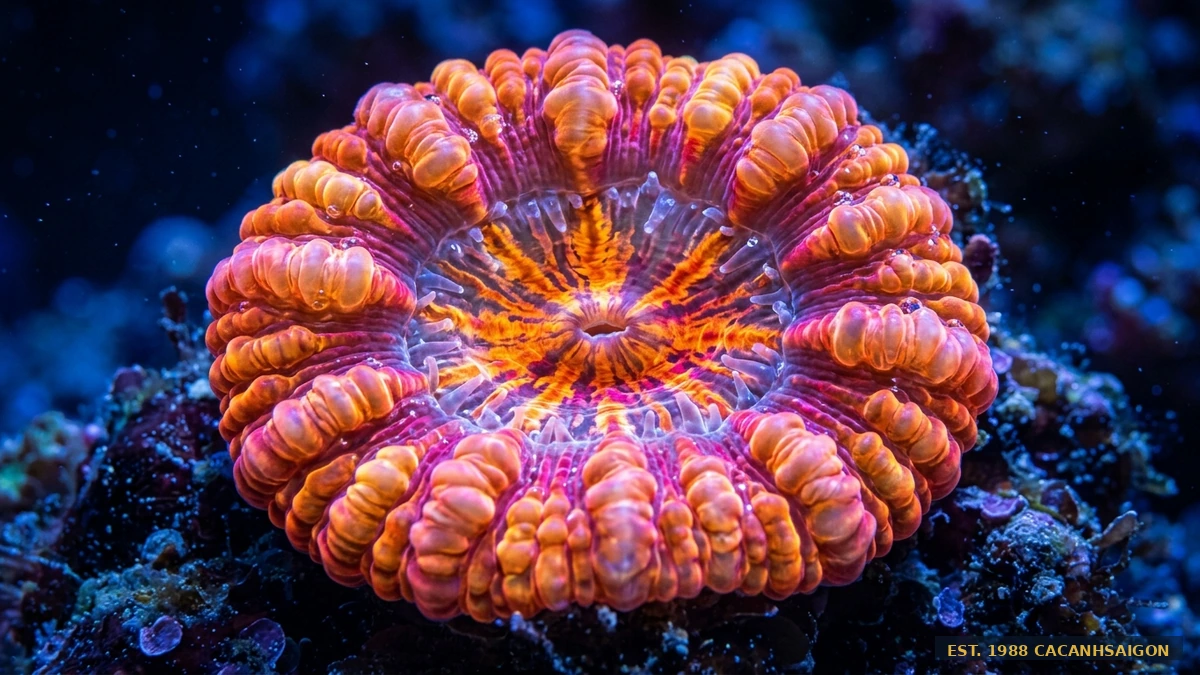
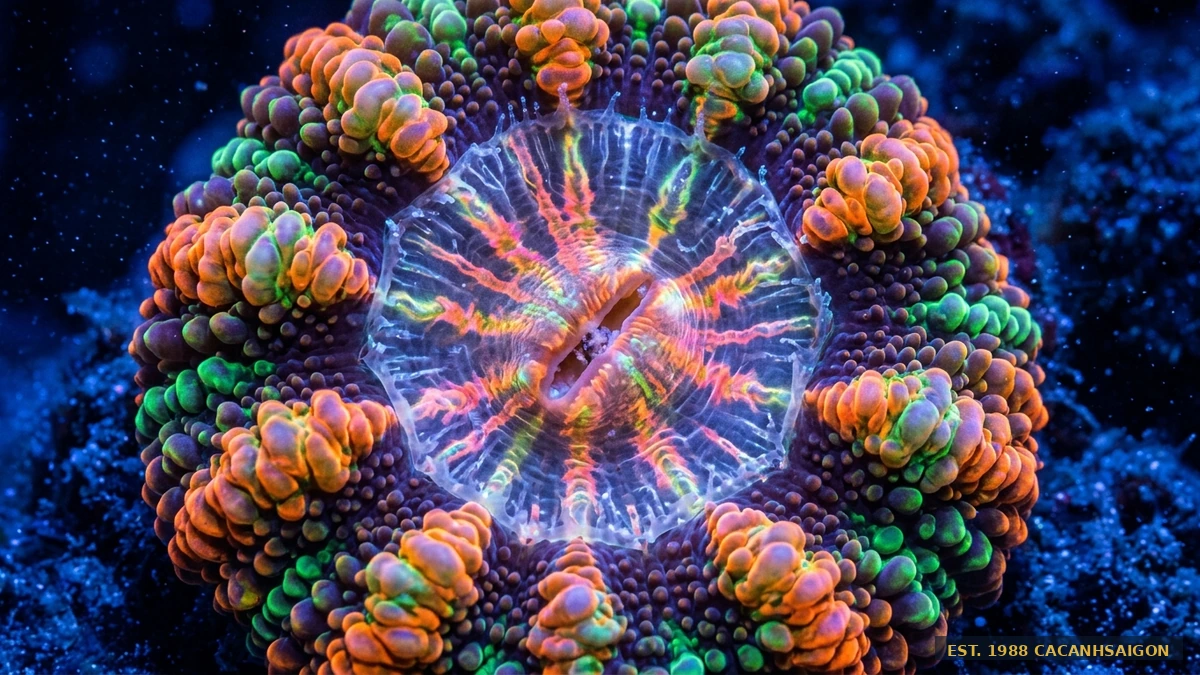
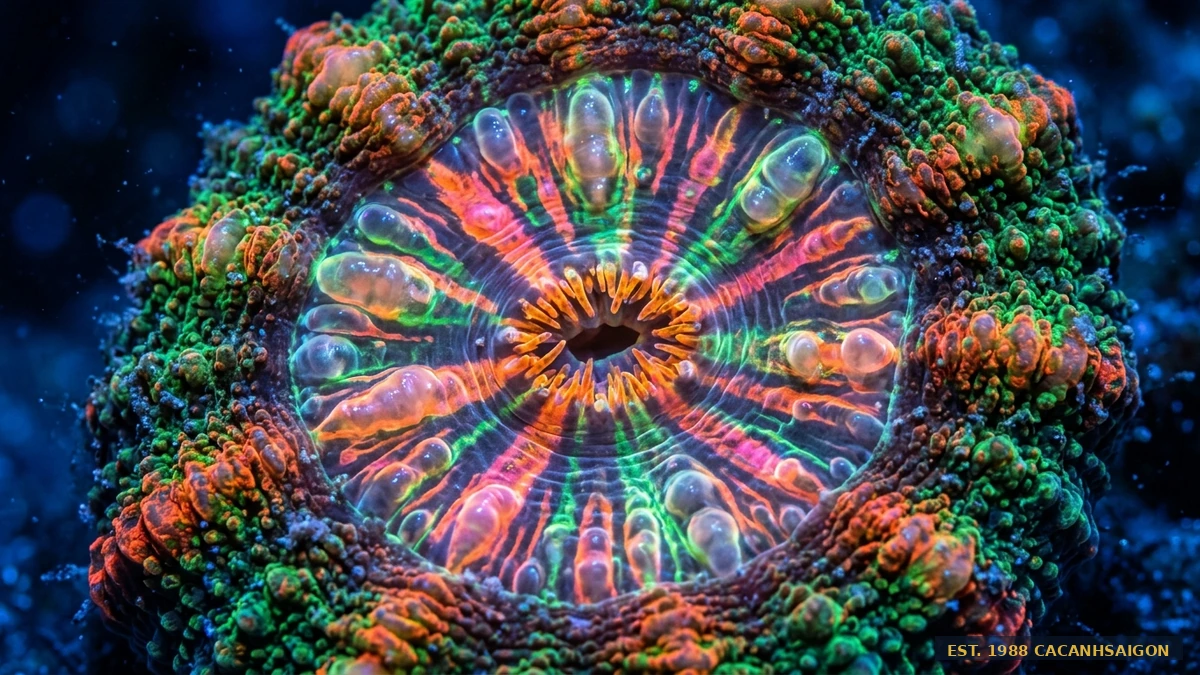
Morphologically, this specimen features finely sculpted corallites embedded within an aragonite matrix. Under specialized actinic wavelength excitation (420–460 nm), fluorescent proteins (GFP and RFP homologs) concentrated in the oral disc and tentacle tips exhibit brilliant chromatic radiance, serving both as photo-protective sunscreens and energy-harvesting pigments for internal endosymbionts.
Reef Husbandry & Water Parameters: Indo Gold Torch Coral (Euphyllia glabrescens ‘Indo Gold’)
| Common Name | Indo Gold Torch Coral |
|---|---|
| Scientific Name | Euphyllia glabrescens ‘Indo Gold’ |
| Coral / Flora Group | San Hô Cứng LPS Euphyllia (Torch, Hammer, Frogspawn) |
| Taxonomic Family | Euphylliidae |
| Natural Biotope / Origin | Indonesia |
| PAR Light Intensity | 140 – 220 µmol/m²/s (Actinic + Daylight Spectrum) |
| Water Flow Dynamics | Vừa phải (Random Turbulent Pulses) |
| Optimal Reef Placement | Tầng giữa rạn |
| Alkalinity Target | 8.2 – 8.8 dKH (Ultra-stable daily consumption) |
| Calcium Target | 420 – 450 ppm |
| Magnesium Target | 1300 – 1380 ppm |
| Husbandry Difficulty | Beginner Friendly |
| Aggression & Sweepers | Rất hung dữ |
| Nutritional Protocol | Hấp thu ánh sáng qua tảo Zooxanthellae; cho ăn trực tiếp mysis, LPS pellets, Phyto/Zoo Plankton 1-2 lần/tuần |
2. Photosynthetic PAR Mapping & Hydrodynamic Flow Dynamics
Successful long-term cultivation of Euphyllia glabrescens ‘Indo Gold’ hinges upon delivering an accurate Photosynthetically Active Radiation (PAR) flux ranging from 140 – 220 µmol/m²/s. Utilizing a combination of high-output marine LED fixtures and T5 actinic supplementary tubes ensures broad-spectrum coverage without generating localized hotspot bleaching or photo-inhibition.
In tandem with light energy, hydrodynamic flow must be calibrated to Vừa phải. Unidirectional laminar currents must be strictly avoided; instead, programmable wavemakers operating on alternating gyre or pulse schedules should wash across the colony from multiple vectors. This facilitates boundary-layer gas exchange, accelerates calcification, and prevents organic detritus sedimentation from suffocating delicate polyps.
3. Water Chemistry Targets: Alkalinity, Calcium, Magnesium & Trace Ions
Reef-building organisms rely on closed-loop stability across all macro-mineral vectors. The target parameters for maintaining Euphyllia glabrescens ‘Indo Gold’ in captive closed loops require an Alkalinity of 8.2 – 8.8 dKH, Calcium concentration of 420 – 450 ppm, and Magnesium maintained at 1300 – 1380 ppm. Daily fluctuations in dKH must not exceed 0.3 units to avert sudden tissue necrosis (STN/RTN).
In addition to the Big Three foundation elements, trace elemental supplementation—specifically Strontium, Potassium, Iodine, and bioactive Fluoride—stimulates chromoprotein synthesis and stabilizes skeletal density. Maintaining an ultra-low nutrient environment (NO3: 2–5 ppm, PO4: 0.02–0.05 ppm) while providing adequate dissolved organic nutrition strikes the optimal equilibrium between vivid coloration and rapid skeletal propagation.
4. Nutritional Protocol, Symbiotic Zooxanthellae & Ecosystem Harmony
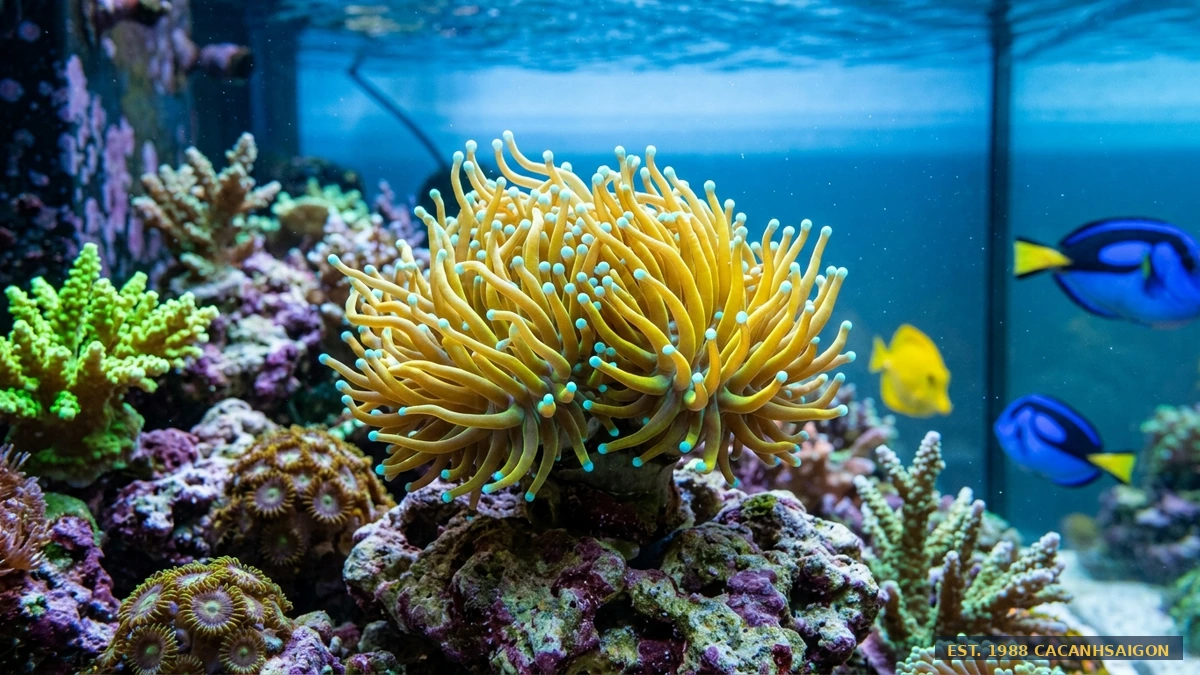
The primary energetic pathway for Euphyllia glabrescens ‘Indo Gold’ is phototrophic synthesis powered by endosymbiotic dinoflagellates (Symbiodiniaceae). However, supplemental micro-heterotrophic feeding profoundly enhances tissue depth and tentacular vigor. Hấp thu ánh sáng qua tảo Zooxanthellae; cho ăn trực tiếp mysis, LPS pellets, Phyto/Zoo Plankton 1-2 lần/tuần
In terms of territorial temperament, this species is rated as Rất hung dữ. Position the colony at Tầng giữa rạn with a minimum clearance buffer of 8–12 cm from adjacent cnidarian colonies to prevent chemical warfare or contact stinging from mesenterial filaments. Adhering to these professional husbandry guidelines ensures breathtaking vitality and long-term thriving in any advanced reef biotope.