Water Chemistry Control Protocol
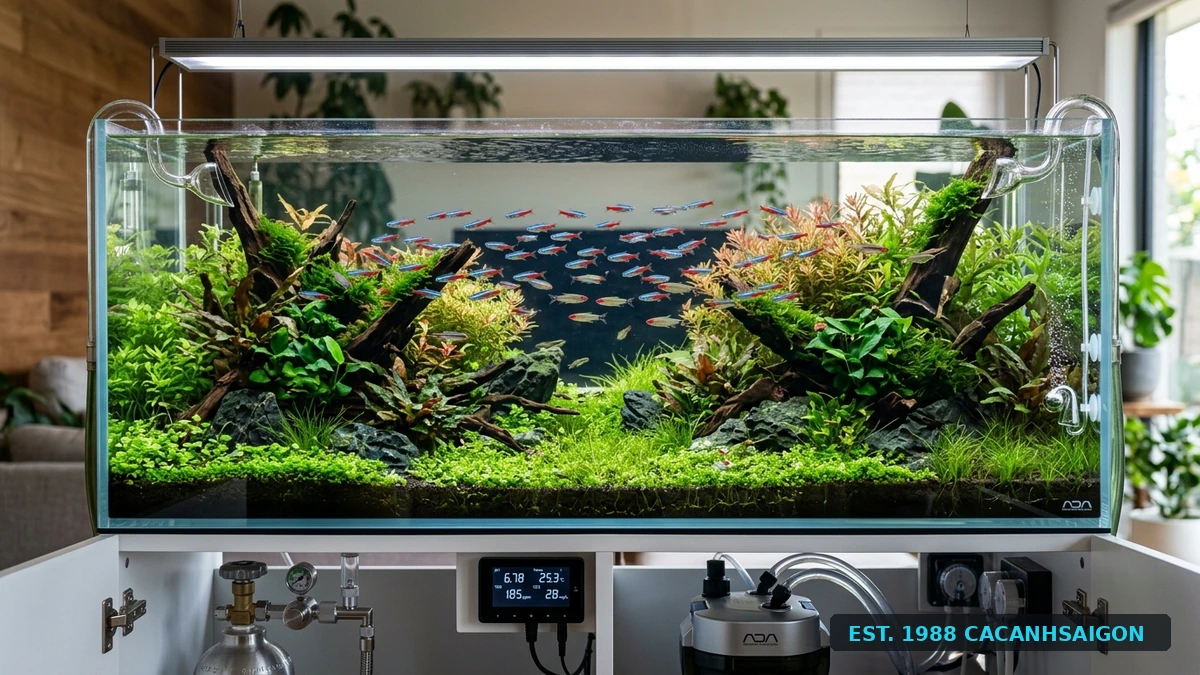
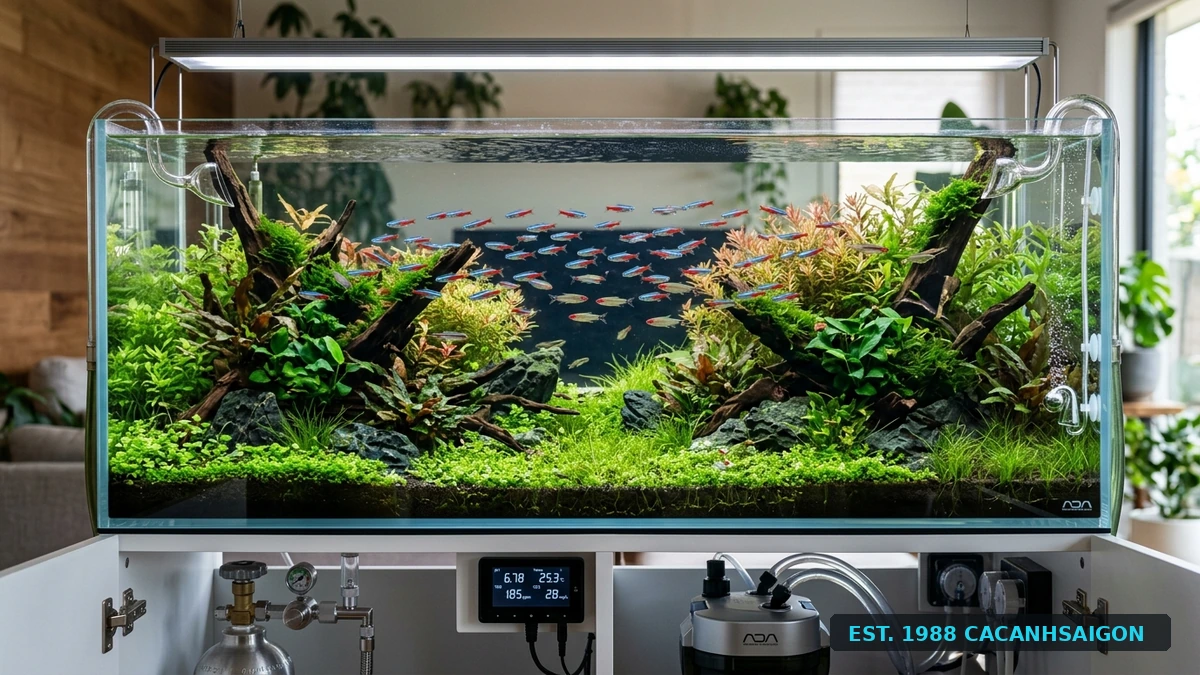
Water chemistry forms the invisible foundation of any successful aquarium. Rather than chasing arbitrary magic numbers, professional aquarists prioritize ionic equilibrium and chemical stability. Fluctuations in pH, general hardness (GH), and carbonate buffer (KH) induce catastrophic osmotic shock in delicate freshwater species. Here is the operational testing protocol from Saigon Aquarium Lab.
1. Carbonate Hardness (KH) & pH Buffering Stability
Carbonate hardness acts as the chemical shock absorber of the aquarium. When KH drops below 2 dKH, organic acids produced by biological nitrification rapidly consume available carbonates, triggering a lethal pH crash. Maintaining KH between 3 and 5 dKH provides robust buffering capacity while allowing controlled carbon dioxide dissolution for lush aquatic plant growth.
Use calibrated liquid reagent tests or digital pH electrodes calibrated with pH 4.01 and 7.00 reference solutions rather than imprecise paper test strips.
2. Total Dissolved Solids (TDS) & Osmotic Balance
TDS measures total mobile charged ions (minerals, salts, metals) dissolved in water. For soft-water species such as Caridina crystal shrimp and Amazonian Discus, maintain TDS within 100 to 140 ppm. Hard-water African cichlids require 250 to 350 ppm. Never raise TDS by more than 15 ppm within a 24-hour period to avoid cell wall osmotic lysis.
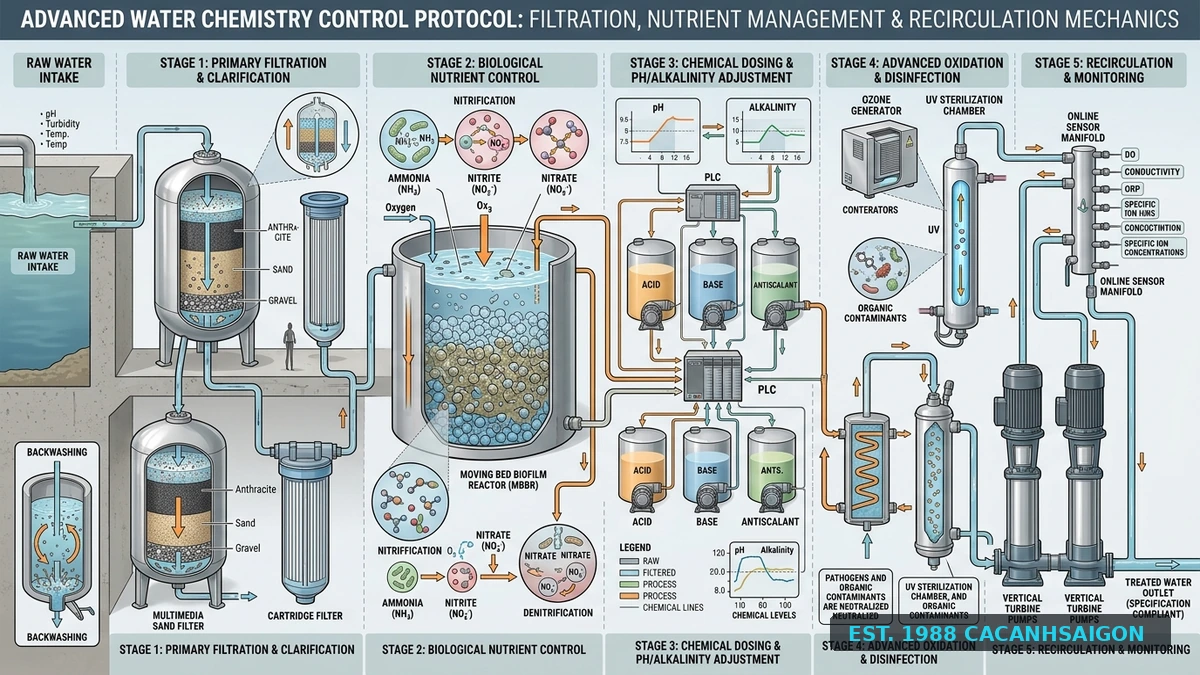
3. General Hardness (GH): Calcium & Magnesium Ratios
General hardness reflects divalent calcium (Ca2+) and magnesium (Mg2+) cation concentrations, essential for crustacean carapace ecdysis and aquatic plant enzyme transport. Maintain a 3:1 or 4:1 Calcium-to-Magnesium ratio. Remineralize pure reverse osmosis (RO) water with pharmaceutical-grade calcium sulfate and magnesium sulfate rather than tap water with unpredictable chloramine variations.
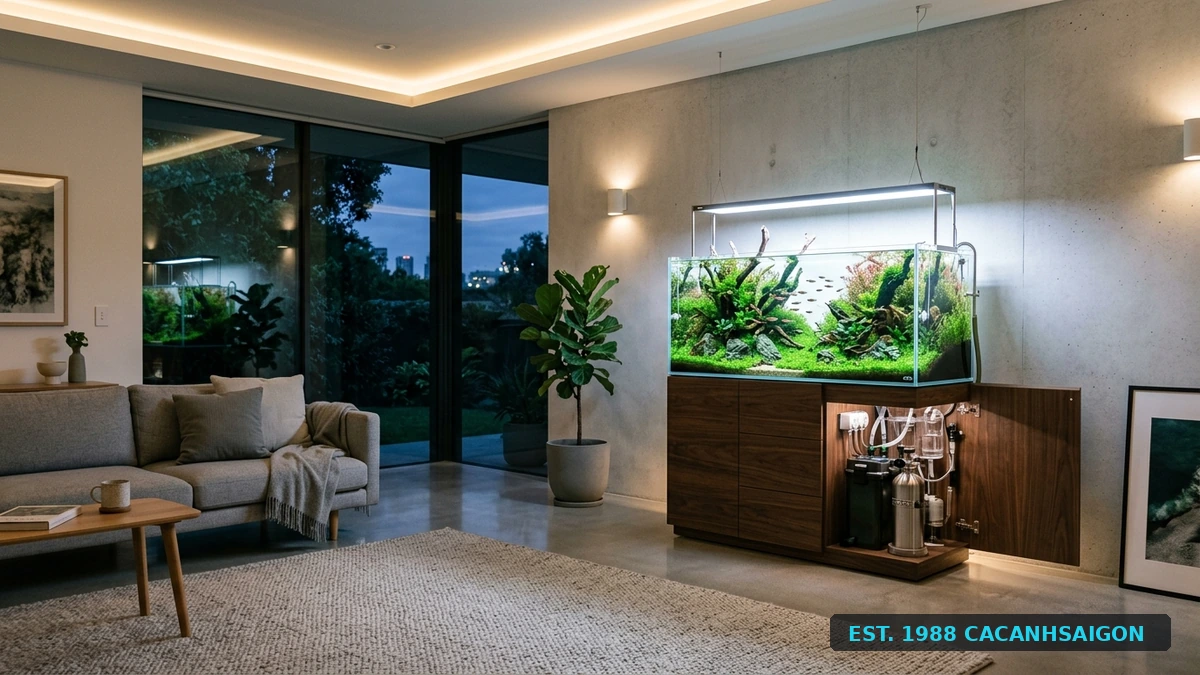
4. Optimal Water Parameter Target Matrix by Ecosystem Type
| Aquatic Ecosystem | pH Range | TDS (ppm) | GH (dGH) | KH (dKH) |
|---|---|---|---|---|
| High-Tech Planted Dutch Style | 6.2 – 6.8 | 120 – 160 | 4 – 6 | 2 – 4 |
| Caridina Crystal Bee Shrimp | 5.8 – 6.4 | 95 – 115 | 3 – 5 | 0 – 1 |
| Neocaridina Cherry Shrimp | 6.8 – 7.5 | 150 – 220 | 6 – 8 | 3 – 5 |
| Amazonian Discus & Altum Biotope | 5.5 – 6.5 | 80 – 120 | 2 – 4 | 1 – 2 |
| Lake Tanganyika African Cichlids | 8.2 – 8.8 | 280 – 380 | 12 – 18 | 10 – 14 |