Yellowlined Basslet: Complete Marine Care Guide & Tank Specs
1. Biological Profile & Species Overview of Yellowlined Basslet
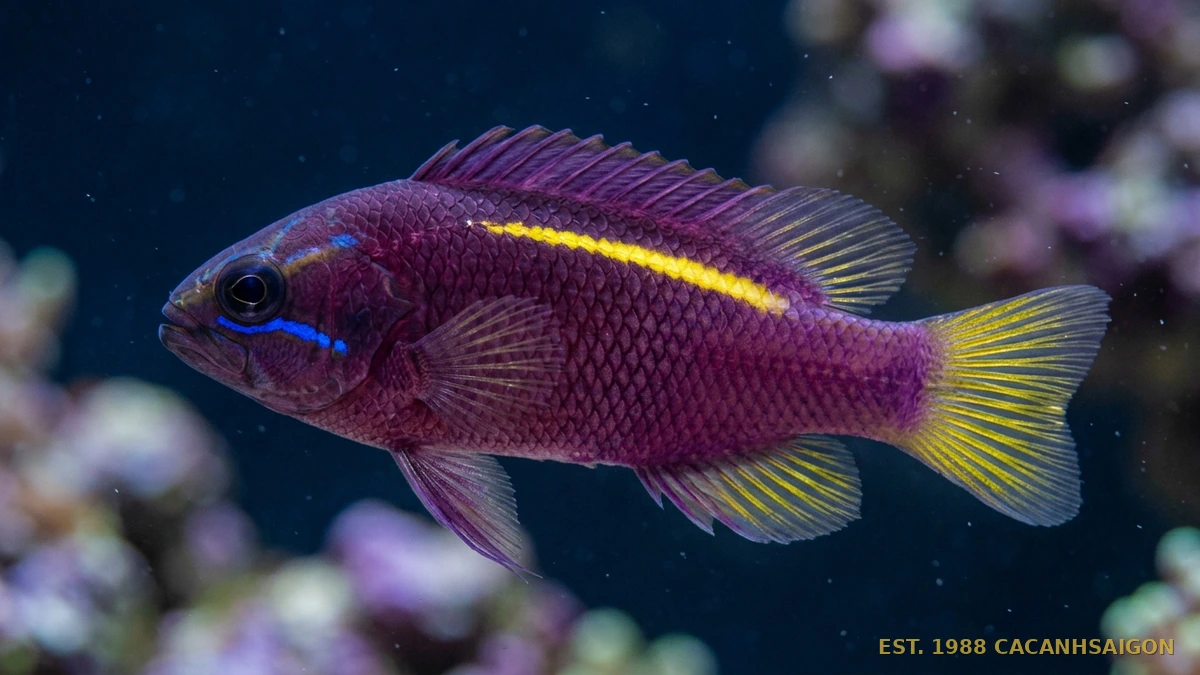
Belonging to the family **Grammatidae**, Yellowlined Basslet is naturally distributed throughout the marine habitats of Vùng biển Caribbean, Mexico. In mature specimens, it reaches an average adult size of **7.0 cm**, necessitating a display aquarium of at least **100 Liters**. Distinguishing biological morphology: Thân màu xám bạc ánh tím với các đường chỉ kẻ màu vàng chanh chạy dài từ mõm đến đuôi và bơi lượn trong hang tối.
Reef tank compatibility is rated as **Reef Safe (100% An toàn)**. Care difficulty is designated as **Trung bình**, accompanied by an innate behavioral temperament: **Nhút nhát**. Ensuring robust vitality requires high dissolved oxygen concentrations, disciplined nutrient control, and mature biological filtration.
Quick Facts & Care Profile: Yellowlined Basslet (Gramma linki)
.sgcc-table-wrap .sgcc-facts th,
.sgcc-table-wrap table th {
background: #06253a !important;
background-color: #06253a !important;
color: #ffffff !important;
font-weight: 700 !important;
}
.sgcc-table-wrap .sgcc-facts td,
.sgcc-table-wrap table td {
color: #102330 !important;
}
| Common Name | Yellowlined Basslet |
|---|---|
| Scientific Name | Gramma linki |
| English Name | Yellowlined Basslet |
| Family | Grammatidae |
| Natural Origin | Vùng biển Caribbean, Mexico |
| Adult Size | Approx. 7 cm (2.8 inches) |
| Ideal pH | 8.1 – 8.4 (Standard Marine Reef Alkalinity) |
| Water Temperature | 24 – 26 °C / 75 – 79 °F (Chiller Stabilized) |
| Specific Gravity & Salinity | 1.023 – 1.025 SG | 32 – 35 ppt |
| Minimum Tank Size | 100 Liters (~26 US Gallons) |
| Dietary Protocol | Ăn mysis shrimp, sinh vật phù du |
| Reef Compatibility | Reef Safe (100% An toàn) |
| Temperament & Care | Nhút nhát • Moderate • Active reef dweller |
2. Water Quality Standards & Marine Chemistry Benchmark
Reef inhabitants require rigorous replication of natural seawater chemistry. Maintain thermal stability at 24°C to 26°C (75°F – 79°F), Specific Gravity (Salinity) within 1.023 to 1.025 SG (32 – 35 ppt), and pH buffered precisely between 8.1 and 8.4.
Alkalinity must be stabilized at 8 – 11 dKH, with Calcium at 400 – 450 ppm and Magnesium maintained at 1250 – 1350 ppm. Ammonia (NH3) and Nitrite (NO2) must measure an absolute 0 ppm at all times; Nitrate (NO3) should be kept under 10 ppm, and Phosphate (PO4) below 0.05 ppm utilizing high-efficiency fractionators and UV sterilization.
3. Aquascaping Architecture, Filtration & Hydrodynamic Flow
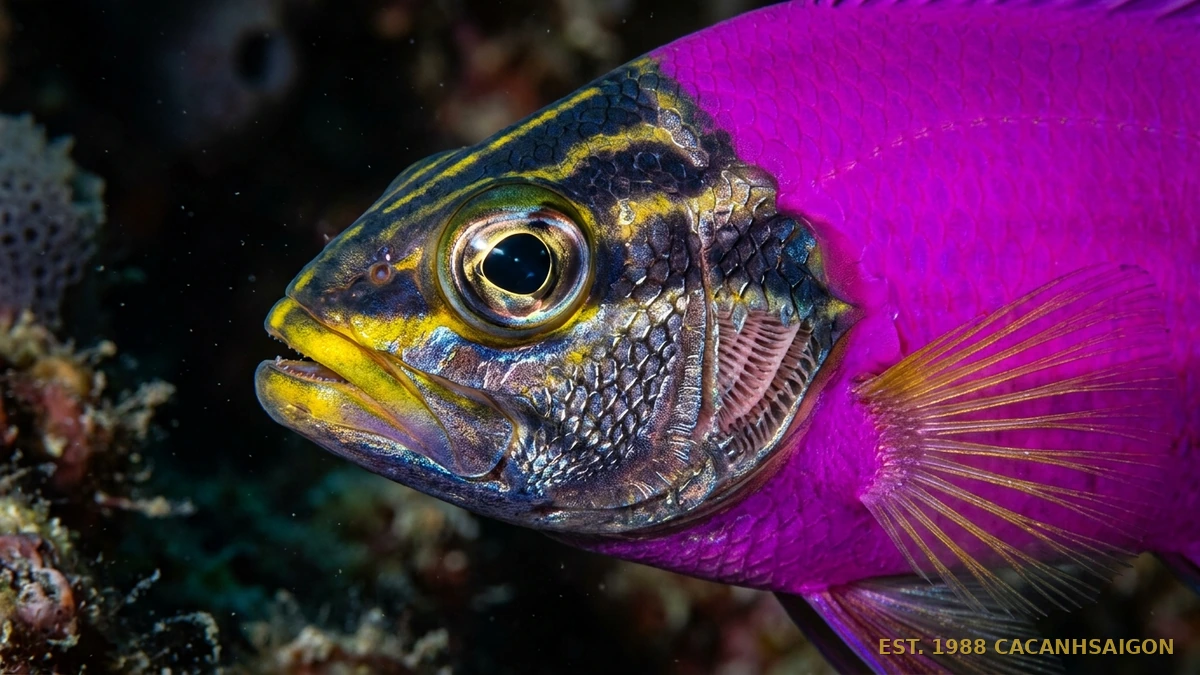
A minimum display volume of **100 Liters** is mandatory for Yellowlined Basslet. The aquascape should incorporate porous coralline live rock arranged into natural archways, overhangs, and secure crevices that provide resting shelters during nocturnal cycles. Generous open swimming corridors must remain unhindered across the front viewing pane.
Filtration architecture should incorporate an oversized protein skimmer, dedicated biological media, and full-spectrum LED lighting (15000K – 20000K actinic blend). Wavemakers configured in alternating gyre pulses ensure effective detritus suspension.
4. Daily Nutritional Protocol, Feeding Regimen & Tankmate Compatibility
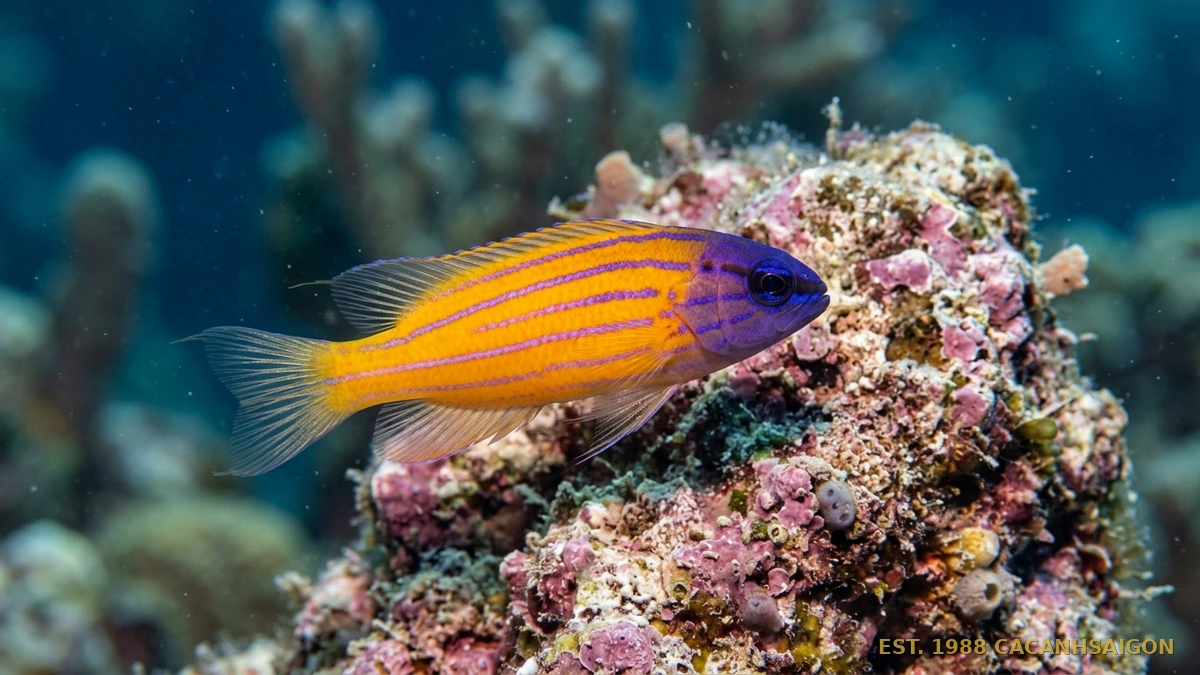
The dietary classification of Yellowlined Basslet is categorized as: Ăn mysis, sinh vật phù du. In captivity, daily rations should rotate between frozen vitamin-enriched Mysis shrimp, freshly hatched Artemia, finely chopped marine shellfish, and premium marine pellets containing Spirulina, garlic extract, and stabilized Vitamin C for immune fortification.
Temperament profile: Nhút nhát. When integrated into a peaceful community reef, Yellowlined Basslet harmonizes well with gentle species such as clownfish, gobies, blennies, chromis, and beneficial reef cleanup crew hermits and snails. Avoid housing with aggressive predators possessing large mouth gapes or conspecifics unless the aquarium provides sufficient territorial volume.
5. Quarantine Protocol (QT) & Proactive Disease Prevention in Saltwater Systems
Every newly acquired specimen of Yellowlined Basslet must undergo a mandatory 14 to 21-day quarantine protocol in a dedicated observation tank prior to display tank introduction. The primary parasitic threats in marine aquaculture are Marine Ich (Cryptocaryon irritans) and Marine Velvet (Amyloodinium ocellatum), which can rapidly proliferate if the specimen suffers osmotic shock or thermal stress.
Optimal prevention involves consistent water stability, dietary garlic supplementation to stimulate feeding response, and inline UV-C sterilization or Ozone administration within the filtration sump. At the first sign of flashing or rapid gill movement, prompt intervention with hyposalinity or chelated copper therapy under careful photometer monitoring ensures total recovery.