Gross vs Net Water Displacement Calculation for 60x40x40cm Aquariums
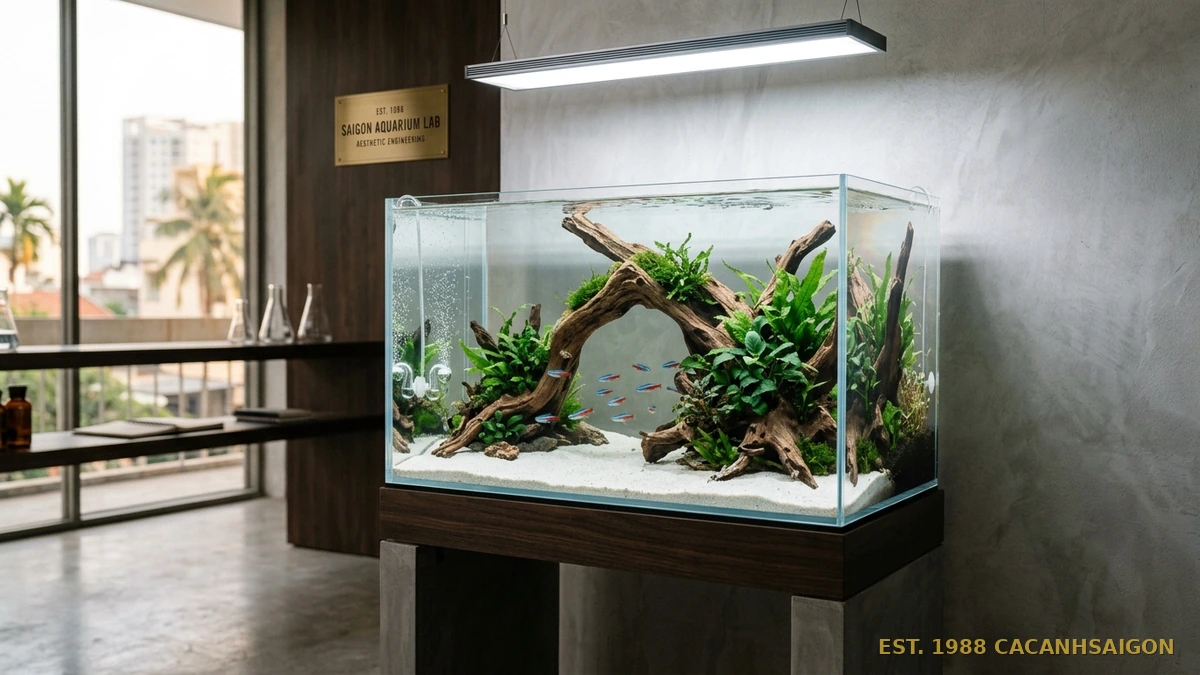
1. Theoretical Gross Volume vs. Glass Thickness & Waterline Gap Subtraction
External nominal dimensions dictate gross spatial capacity: V_gross = 60 × 40 × 40 / 1000 = 96.0 Liters. However, water cannot occupy the space displaced by heavy float glass panes. For a 60cm rimless tank, hydrostatic deflection resistance requires a minimum of 8mm ultra-clear low-iron glass.
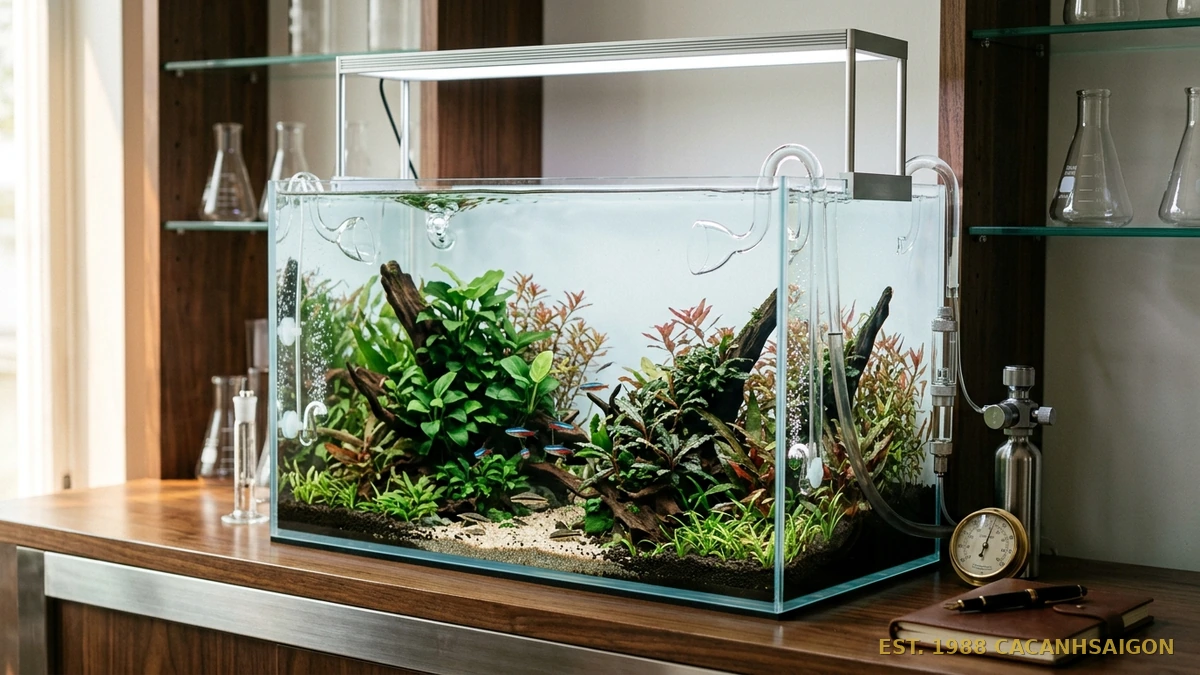
Subtracting the 8mm base pane and 16mm across length and width yields true internal dimensions: 58.4 × 38.4 × 39.2 cm = 87.9 Liters, shedding 8.1 liters immediately. Furthermore, operating rimless glass with water filled to the top edge invites aquatic jumping and capillary spillage. An essential 2.5 cm waterline safety gap trims the true internal water column to 58.4 × 38.4 × 36.7 cm = 82.3 Liters.
2. Archimedean Displacement of Substratum, Hardscape & Wood
Solid decorative materials displace fluid volume directly proportional to their submerged mass and structural density:
– Granular Aquasoil: A standard 9-liter bag of volcanic clay aquasoil creates a 4–5 cm bed. Due to intergranular porosity (~38%), 9L of packed soil displaces approximately 5.4 to 5.8 liters of fluid, allowing the remainder to occupy void spaces.
– Inert Mineral Hardscape (Seiryu / Dragon Stone): With dense mineral specific gravities of 2.5 – 2.7 kg/L, a classic 15kg Iwagumi layout displaces 5.8 – 6.0 liters of water.
– Dense Driftwood: Saturated submerged hardwood displaces roughly 3.5 – 4.0 liters for every 4kg of wood.
Combined, typical hardscape arrangements displace between 15.0 to 16.5 liters of potential water volume.
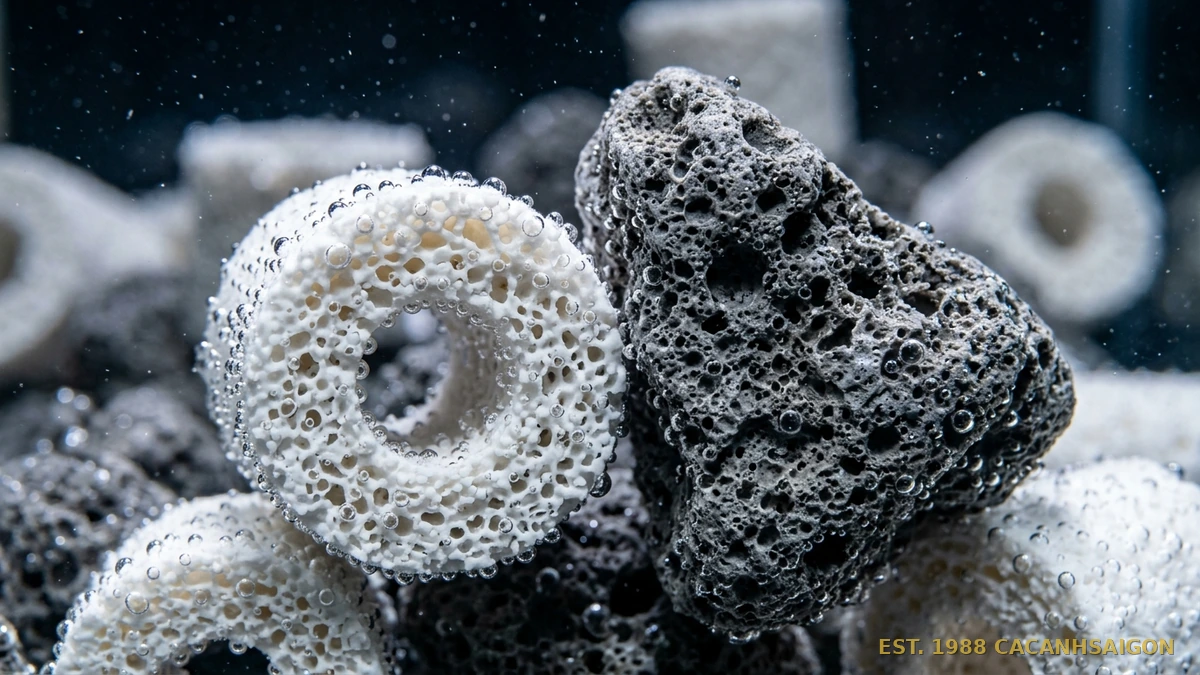
3. Engineering Implications on Filtration Turnover & Dosing Thresholds
Factoring an auxiliary external canister filter (+3.5L net fluid), the operational water column stabilizes at 72.5 Liters. Overlooking this 24.5-liter deficit induces severe operational consequences:
1. Toxic Concentration Risks: Dosing all-in-one macro/micro nutrients or medication for 96L instead of 72.5L results in a 32.5% chemical overdose, frequently triggering Black Beard Algae (BBA) outbreaks or invertebrate toxicity.
2. Flow Dynamic Sizing: Targeting a pristine 7x turnover rate necessitates 72.5 × 7 ≈ 508 L/h of true in-tank flow. Accounting for a standard 30% head loss across lily pipes and biological media beds, an external canister rated at 750 – 800 L/h provides the optimal hydraulic operating envelope.
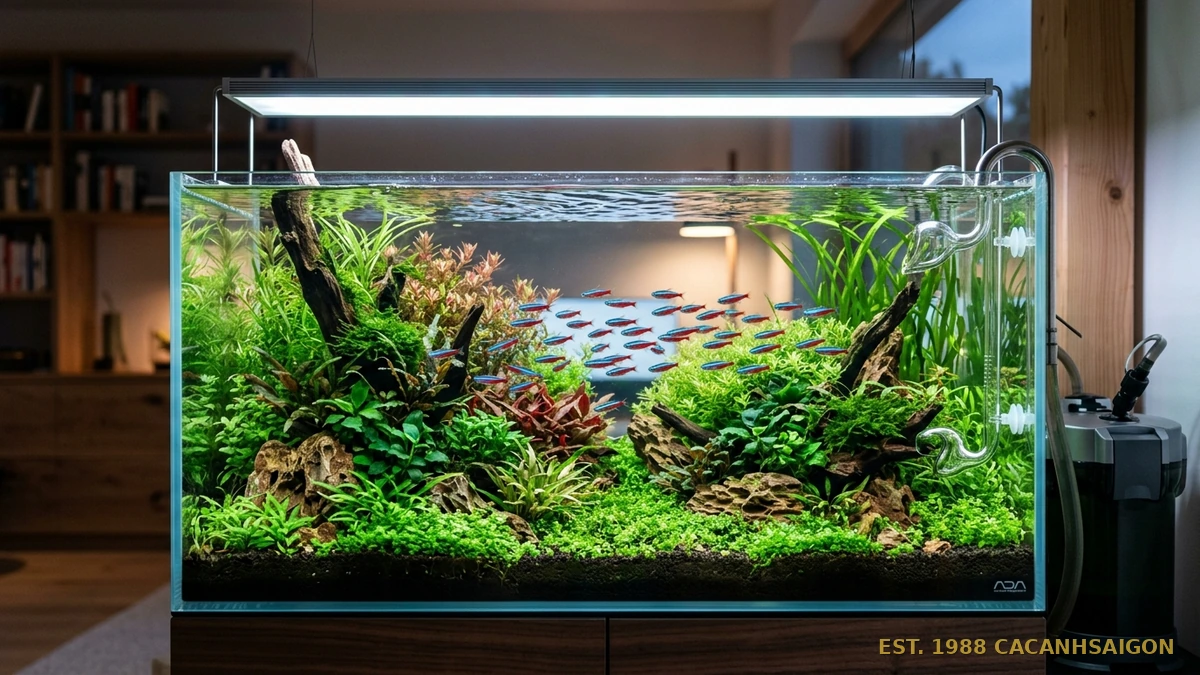
4. Laboratory Specification Matrix: 60x40x40cm Displacement Ledger
The empirical laboratory breakdown below documents each volumetric deduction calibrated at the Saigon Aquarium Lab:
| Hydraulic Parameter | Quantitative Value | Technical Note |
|---|---|---|
| Nominal Gross Volume | 96.0 Liters (100%) | Outer dimensional footprint 60 × 40 × 40 cm |
| 8mm Low-Iron Glass Deduction | -8.1 Liters (-8.4%) | True internal volume: 58.4 × 38.4 × 39.2 cm |
| 2.5cm Surface Air Gap | -5.6 Liters (-5.8%) | Prevents wave spillover and fish jumping |
| Granular Aquasoil Bed (9L) | -5.8 Liters (-6.0%) | Net volume displacement after intergranular saturation |
| Mineral Rock & Driftwood | -7.5 Liters (-7.8%) | Archimedean displacement of 12kg stone + 3kg wood |
| Canister Filter Water Reservoir | +3.5 Liters (+3.6%) | Net water column circulating inside canister canister |
| True Net Operating Water Volume | 72.5 Liters (68 – 74 L) | Total Empirical Displacement: 24.5% |
| Recommended Turnover Target | 6x – 8x hourly cycles | Effective circulating rate: 450 – 580 L/h |
| Recommended Filter Pump Rating | 650 – 800 L/h | Compensates for 30% dynamic head loss |